Every production car that rolls off an assembly line is, at its core, a negotiation with physics. Aerodynamics sits at the center of that negotiation, shaping decisions that ripple from the vehicle’s silhouette down to the smallest surface detail. Achieving an impressively low drag coefficient is rarely a straightforward win — it almost always demands that engineers give something up elsewhere.
Today’s most aerodynamically refined production vehicles represent years of computational modeling, wind tunnel validation, and deliberate compromise. Understanding what gets traded away in the pursuit of slippery airflow reveals just how complex modern automotive engineering truly is.
Drag vs. Downforce: A Fundamental Tension
One of the most persistent conflicts in aerodynamic engineering is the relationship between drag reduction and downforce generation. A body shaped purely to minimize drag tends to produce little downforce, which can compromise high-speed stability and cornering confidence. Conversely, aggressive aerodynamic elements designed to press a car into the road — spoilers, diffusers, splitters — introduce additional drag that works against efficiency.
For high-performance production cars, this tension is especially pronounced. Engineers must define the vehicle’s purpose clearly before committing to an aerodynamic philosophy. A grand tourer optimized for long-distance cruising prioritizes low drag above all. A sports car intended for track-day use may willingly accept more drag in exchange for meaningful downforce and predictable handling at speed.
The Cooling Problem Nobody Talks About
Sealing a car’s body to minimize turbulent airflow sounds ideal in theory. In practice, however, engines, brakes, batteries, and power electronics generate significant heat that must be dissipated. Cooling systems require airflow, and airflow management openings — grilles, vents, ducts — inevitably disrupt the clean surfaces that aerodynamicists prefer.
Modern electric vehicles have offered engineers a partial advantage here. Without a combustion engine demanding a large frontal grille, EVs can adopt smoother front fascias and redirect airflow more deliberately. Yet battery thermal management introduces its own cooling demands, and brake systems still require dedicated airflow channels. The problem evolves; it does not disappear.
Active grille shutters represent one engineering response to this challenge. By opening only when cooling is needed and remaining closed during highway cruising, they help reduce drag without permanently sacrificing thermal performance. It is a practical compromise, though one that adds mechanical complexity and potential failure points.
Styling and the Limits of the Wind Tunnel
Aerodynamic efficiency and visual appeal do not always align. Flush door handles, covered wheel arches, and steeply raked rear screens all contribute to lower drag figures — but not every buyer or designer embraces the aesthetic consequences of pure aerodynamic logic.
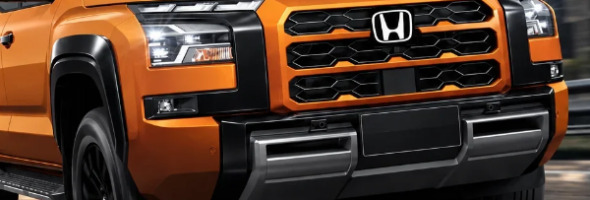
Production vehicles must appeal to a mass market, meaning that industrial designers and aerodynamicists frequently find themselves in constructive conflict. A dramatic roofline may read as elegant in a showroom yet create unwanted lift at the rear axle. A bold front fascia may communicate character and brand identity while simultaneously generating more turbulence than an engineer would accept in isolation.
The best production cars manage to resolve this tension creatively, using carefully sculpted underbody panels, subtle integrated spoilers, and optimized wheel designs to recover aerodynamic losses introduced by styling decisions made elsewhere.
Tires, Wheels, and the Overlooked Variables
Rotating wheels are among the most aerodynamically disruptive elements on any vehicle. The turbulence generated around exposed tire sidewalls can account for a meaningful portion of a car’s total aerodynamic drag. Wheel covers, aerodynamically optimized spoke designs, and partially enclosed wheel arches are all strategies employed to manage this effect.
Tire width presents another trade-off. Wider tires improve grip and handling but increase frontal area and aerodynamic resistance. Manufacturers offering multiple trim levels often face the reality that sportier, wider-tired variants carry measurably higher drag coefficients than their more modest counterparts — a detail frequently buried in the fine print of technical specifications.
Precision Has a Price
The pursuit of aerodynamic excellence in production vehicles is ultimately a study in prioritization. Every gain in drag reduction carries a corresponding cost — whether in cooling capacity, downforce, design freedom, or manufacturing complexity. The engineers and designers who navigate these trade-offs most skillfully are those who understand that the goal is never perfection in a single dimension, but rather the most intelligent balance across all of them.
As vehicle platforms grow more sophisticated and simulation tools more powerful, the solutions will continue to improve. But the fundamental nature of engineering compromise will not change. Air, it turns out, does not negotiate.