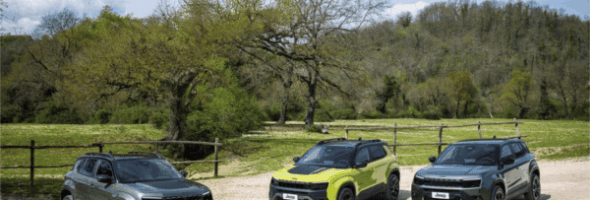
For decades, front-wheel drive dominated the mainstream automotive landscape. It was practical, cost-effective, and efficient — qualities that made it the default choice for family sedans, compact hatchbacks, and entry-level vehicles around the world. Rear-wheel drive, meanwhile, was quietly pushed into the territory of performance cars, luxury marques, and rear-engine exotics. But something is shifting. A growing number of automakers are reconsidering that assumption, and rear-wheel drive is gradually reappearing where few expected to see it.
The Electric Vehicle Factor
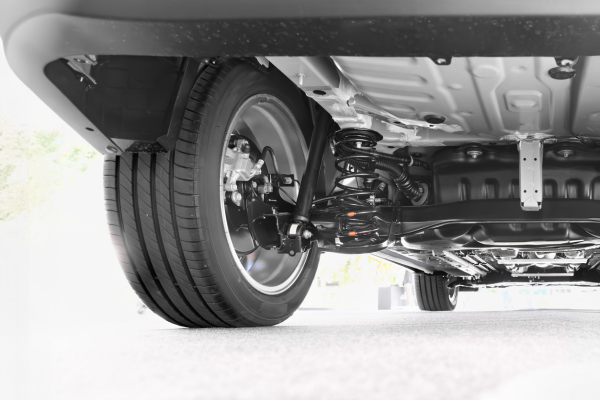
The single most important driver behind this resurgence is the rise of electric vehicles. Battery-electric powertrains have fundamentally changed the calculus of vehicle engineering. In a conventional internal combustion car, packaging a front-wheel-drive system makes sense because the engine, transmission, and driven axle can all be consolidated at the front, saving space and reducing complexity. But with electric motors, that logic breaks down.
Electric motors are compact, lightweight, and can be positioned almost anywhere within a vehicle’s architecture. Placing a single motor at the rear axle — a rear-wheel-drive configuration — is often simpler and more efficient than routing power to the front. It also allows engineers to optimize weight distribution across the vehicle, a key factor in both handling and ride quality.
Many of the new EV platforms developed in recent years have been designed from the ground up with rear-wheel drive as the baseline configuration, with all-wheel drive achieved by adding a second motor at the front axle rather than by default. This approach gives automakers greater flexibility and cost efficiency across their lineup.
Handling Dynamics That Consumers Are Beginning to Notice
Beyond packaging advantages, there is a growing awareness among consumers — even non-enthusiast buyers — that rear-wheel drive simply feels different to drive. The absence of torque steer, more balanced cornering behavior, and a cleaner, more direct steering response all contribute to a driving experience that many find more satisfying, even in everyday conditions.
As mainstream buyers increasingly encounter rear-wheel-drive electric vehicles during test drives and ownership, expectations are shifting. Automakers are taking note. A vehicle that drives well is no longer a luxury exclusive; it is becoming a baseline expectation.
Platform Economics Have Changed
Historically, one of the strongest arguments against rear-wheel drive for mass-market vehicles was cost. Developing a dedicated rear-wheel-drive platform required significant investment, and those costs were difficult to justify for high-volume, price-sensitive segments. Front-wheel drive, by contrast, was well understood, widely shared across model lines, and relatively inexpensive to engineer and manufacture.
The transition to electric vehicles has disrupted that logic. Automakers are already investing enormous sums in new EV architectures. When those architectures are designed around rear-wheel or dual-motor all-wheel drive configurations, the incremental cost of offering a rear-wheel-drive variant is minimal. The platform economics that once made front-wheel drive mandatory for mainstream models no longer apply in the same way.
Not Just an EV Story
While electrification is the primary catalyst, the rear-wheel-drive comeback is not exclusively an electric vehicle story. Some automakers are revisiting rear-wheel-drive layouts for performance-oriented combustion and hybrid vehicles as well, recognizing that differentiation through driving character is a meaningful competitive advantage in a crowded market.
As mainstream segments become increasingly defined by similar specifications and similar pricing, the way a car feels to drive is emerging as a genuine point of distinction. Rear-wheel drive, for many engineers and product planners, is one of the most effective tools for delivering that distinction.
Looking Ahead
The return of rear-wheel drive to mainstream automotive lineups reflects something broader happening across the industry. Vehicle architecture is being rethought from first principles, driven by electrification, new manufacturing priorities, and evolving consumer expectations. In that context, a layout long associated with tradition and driving purity is proving to be, counterintuitively, one of the most forward-looking choices an automaker can make.
Whether the trend continues will depend on how quickly electric vehicles penetrate the mainstream market and whether consumers ultimately reward automakers that prioritize driving dynamics alongside practicality and value. The early signs suggest they will.