There is a quiet revolution happening on the surfaces of today’s vehicles. It does not announce itself with chrome accents or aggressive body creases. Instead, it reveals itself in what is not there — or rather, in what has been carefully hidden from plain sight. Flush door handles, seamless body panels, and concealed functional elements are rapidly becoming the defining visual language of contemporary car design.
This is not merely a styling trend. It reflects a deeper shift in how designers, engineers, and brands understand the relationship between form, function, and identity in the modern automotive era.
The Rise of the Flush Door Handle
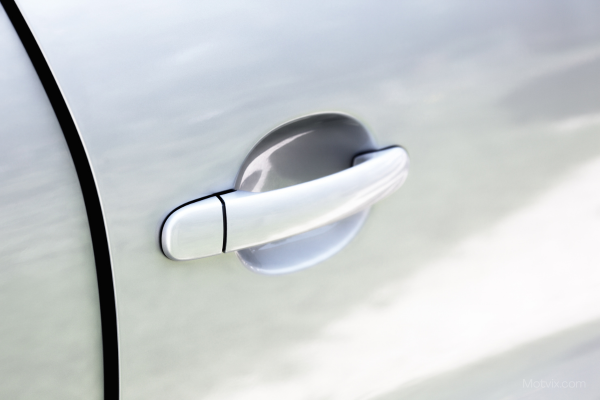
For decades, the door handle was a purely utilitarian fixture — a chrome or plastic protrusion that made no pretense about its purpose. Today, that logic has been fundamentally rethought. Retractable and flush-mounted door handles have migrated from luxury and electric vehicle segments into mainstream automotive design, and their presence signals far more than aesthetic preference.
On a practical level, flush handles improve aerodynamic efficiency by reducing drag along the vehicle’s flanks. Every protruding element creates turbulence, and in an era where electric vehicle range is directly tied to aerodynamic performance, eliminating unnecessary protrusions becomes an engineering priority as much as a stylistic one.
But the appeal goes beyond efficiency. There is a psychological dimension to the flush handle: it transforms the act of entering a vehicle into something deliberate and refined. The door does not simply open — it responds to touch, presenting its handle only when needed, then retreating again into the clean surface of the body.
Hidden Details as a Design Statement
Flush handles are only one expression of a broader design philosophy that prizes concealment and visual silence. Modern vehicles are increasingly designed around the idea that every visible element must earn its place — and that many elements are better hidden altogether.
- Concealed hinges maintain the visual continuity of body panels without the visual interruption of traditional hardware.
- Integrated spoilers and diffusers emerge only when aerodynamic conditions demand them, keeping the silhouette clean at lower speeds.
- Hidden lighting elements dissolve into body lines until activated, creating a sense of depth and surprise in daylight-running and signature lighting systems.
- Frameless windows and pillar-less doors contribute to an almost architectural sense of openness and surface purity.
Collectively, these choices define vehicles that reward close attention. The more one looks, the more considered details emerge — a design approach borrowed from high-end architecture and luxury goods, now fully integrated into automotive culture.
Technology as an Enabler of Restraint
It is worth noting that this minimalist direction in exterior design would not be possible without significant advances in manufacturing precision, materials science, and electronics. Retractable handles, for example, require reliable electromechanical systems that must perform flawlessly across extreme temperatures, years of use, and thousands of cycles.
Similarly, the seamless body surfaces that characterize modern premium vehicles demand tolerances in panel alignment and paint application that were simply not achievable in earlier production processes. What appears effortless on the surface is, in reality, the result of complex engineering discipline working in service of visual simplicity.
A New Conversation Between Brands and Buyers
This evolving design language also speaks to changing consumer expectations. Today’s buyers — particularly in the electric and premium segments — are increasingly drawn to vehicles that communicate sophistication through restraint rather than spectacle. A car that hides its details well is a car that appears to have nothing to prove.
Brands that have embraced this direction most fully are finding that the vocabulary of concealment creates strong visual identity and brand differentiation on its own terms. The absence of clutter is the statement.
The Surface Is the Message
Modern automotive design is, at its best, a conversation conducted in surfaces, light, and carefully managed absence. Flush door handles and hidden functional details are not just aesthetic choices — they are declarations about what a vehicle values, what technology makes possible, and what kind of relationship a brand seeks with the people who drive its cars.
In the new language of car design, silence speaks volumes.