The idea of talking to your car and having it understand you — truly understand you — has long been a staple of automotive science fiction. Today, that idea is rapidly becoming standard equipment. In-car artificial intelligence assistants are now appearing across a wide range of vehicles, from entry-level models to flagship luxury sedans. The technology is here. The real question is whether it genuinely improves the driving experience or simply adds another layer of distraction dressed up as innovation.
What In-Car AI Assistants Actually Do
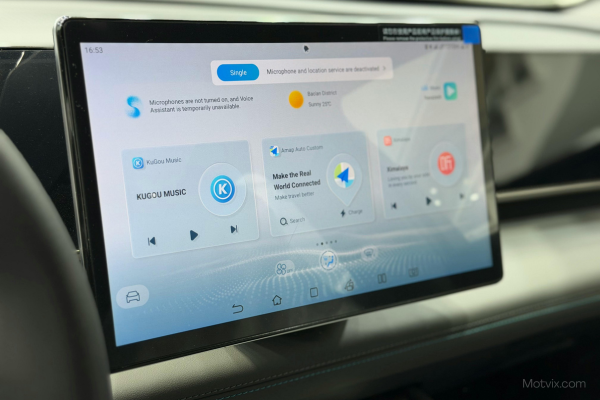
Modern in-car AI assistants go far beyond the basic voice commands of earlier generations. Where previous systems required rigid, pre-programmed phrases, today’s AI-powered alternatives use natural language processing to interpret conversational speech. A driver can ask for a restaurant recommendation, request a climate adjustment, or query the vehicle’s range — all without touching a screen.
Many of these systems are now integrated with cloud connectivity, meaning they can pull real-time data on traffic, weather, fuel prices, and points of interest. Some vehicles have moved toward embedded AI platforms that learn driver preferences over time, adjusting suggested routes, media selections, and even seat and mirror positions based on past behavior.
The ambition, clearly, is to create a cabin that feels responsive and personalized — a co-pilot rather than a tool.
Where the Technology Delivers
In practical terms, the strongest argument for in-car AI assistants is safety. Any interaction that keeps a driver’s eyes on the road and hands on the wheel has inherent value. Well-implemented voice control for navigation, phone calls, and media playback reduces the need to navigate complex touchscreen menus while moving — a genuine improvement over the systems they replace.
Personalization is another area where AI begins to justify its presence. Vehicles that remember preferred cabin temperatures, driving modes, and frequently visited locations offer a level of convenience that builds quietly over time. For drivers who spend significant hours behind the wheel, these small efficiencies accumulate into a meaningfully better experience.
Where the Gaps Remain
Despite the progress, in-car AI assistants still struggle in key areas. Accuracy remains inconsistent, particularly in noisy environments, with strong accents, or when handling complex multi-part requests. The frustration of repeating a command or receiving an irrelevant response can make the system feel more like a liability than an asset.
Privacy is another consideration that many drivers have yet to fully examine. Systems reliant on cloud connectivity are, by definition, transmitting data. Understanding what is collected, stored, and how it is used remains a gap in consumer awareness that manufacturers have not done enough to address clearly.
There is also the risk of over-engineering. When an AI assistant attempts to manage too many functions — suggesting content, offering commentary, anticipating needs without being asked — it can shift from helpful to intrusive. The best in-car technology tends to be invisible when not needed and responsive when called upon. Striking that balance is harder than it appears.
The Road Ahead
The trajectory of in-car AI is unambiguously upward. As natural language models continue to improve and vehicle software platforms become more sophisticated, the reliability and usefulness of these systems will grow. The integration of AI with driver-assistance features, predictive maintenance alerts, and energy management in electric vehicles points toward a future where the assistant becomes genuinely embedded in how the vehicle operates — not just how the driver interacts with it.
For now, in-car AI assistants occupy an interesting middle ground. They are demonstrably more capable than what came before, genuinely useful in specific contexts, and still imperfect enough to remind drivers that the technology is still maturing. The promise is real. The execution, depending on the platform and the manufacturer, remains a work in progress.
The takeaway for drivers: approach in-car AI as a useful tool rather than a complete solution. Use it where it works well, and don’t expect it to replace good judgment behind the wheel — at least not yet.