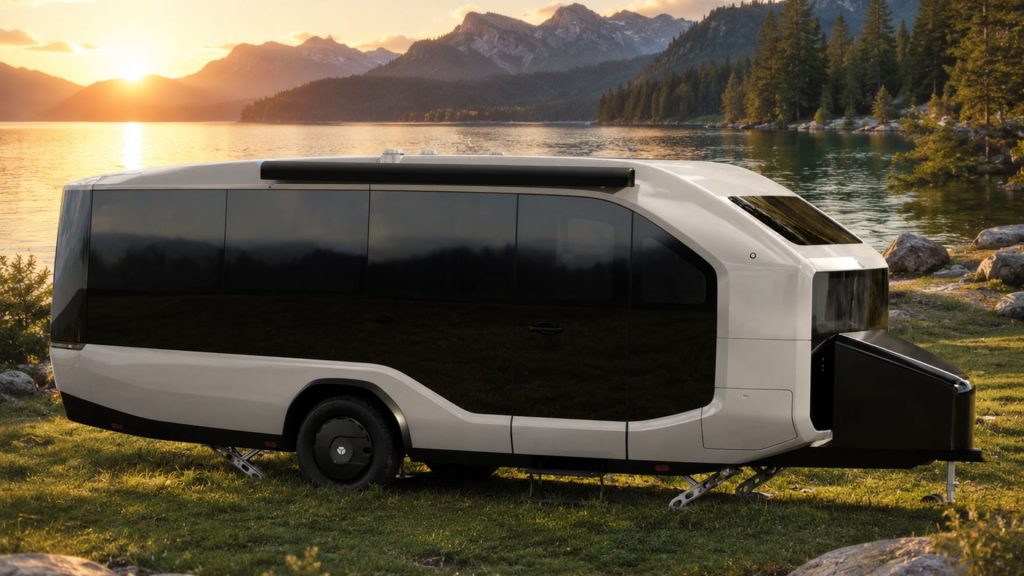
The Pebble Flow electric trailer is bringing a more connected and automated experience to RV travel. Designed by California-based startup Pebble, it combines electric power, smart controls, and modern camping features in one premium travel trailer.
Additionally, the Pebble Flow shows how electric technology is expanding into new areas of road travel. Its goal is not only to change the camping experience, but also to make it easier for people who want more comfort, more independence, and more control through a connected app.
What Makes the Pebble Flow Different
Pebble Flow is not a traditional RV with a few modern features added. It was designed as a fully electric travel trailer with a 45 kWh battery, integrated solar capability, and app-based controls for key functions.
The trailer uses its battery to power appliances, lights, heating, air conditioning, and other onboard systems. According to Pebble, the battery can support off-grid use for up to seven days, depending on conditions and usage.
Pebble also says the Flow can charge through different sources, including home charging, public charging, campsite power, solar energy, and regenerative charging while being towed. This gives it a more flexible energy setup than many conventional travel trailers.
Smart Features Designed to Reduce RV Stress
One of the main ideas behind the Pebble Flow is making RVing less intimidating. The trailer includes features such as Magic Hitch, InstaCamp, Remote Control, and Active Tow Assist, depending on the version selected.
Magic Hitch is designed to help the trailer align and connect to the towing vehicle. InstaCamp can deploy or retract items such as the awning, stairs, lights, and stabilizers through the app. Remote Control allows users to move the trailer slowly into position after it has been unhitched.
Active Tow Assist is one of the most important features for drivers. It uses the trailer’s electric motors to help reduce the load on the tow vehicle. This may be especially useful for electric vehicles, where towing can significantly affect driving range.
Battery, Size, Interior, and Practical Details
The Pebble Flow measures 25 feet long, 7 feet 6 inches wide, and 8 feet 8 inches tall. Pebble originally listed a required towing capacity of 6,200 pounds, while WIRED later noted a gross vehicle weight rating of 6,800 pounds.
Inside, the trailer is designed for travel, work, and relaxation. It includes a kitchen with an induction cooktop, convection microwave, full-size refrigerator, storage areas, a bathroom, wraparound windows, and flexible furniture.
The sleeping setup can accommodate up to four people. A queen-size Murphy bed can fold away to create more usable space, while the dining area can convert into another sleeping area.
Connectivity is also part of the experience. Pebble says the Flow is Starlink-ready, and the companion app can control functions such as lights, door locks, climate settings, and other trailer systems.
Price and Availability
Pebble’s original announcement listed the Flow starting at $109,000, with the Magic Pack version starting at $125,000. More recent build information shows updated pricing, including a Standard version at $113,500, a Magic Pack version at $139,500, and a Founders Edition at $179,000.
Availability also appears to have changed since the original announcement. Current order information lists the Founders Edition as available now, Magic Pack delivery estimated in 2–8 weeks, and the Standard version planned for 2027.
That pricing places the Pebble Flow in the premium RV market. It is not aimed at budget camping, but at buyers who want a high-tech trailer with electric power, software features, and automated setup tools.
What This Means for the RV Industry
The Pebble Flow shows how electric vehicle technology is starting to influence the RV world. Instead of focusing only on bigger interiors or luxury finishes, Pebble is using batteries, software, motors, and automation to change how a trailer works.
For buyers, the main appeal is convenience. Easier hitching, app-based setup, off-grid power, and towing assistance could make RV travel less stressful, especially for people new to trailers.
However, the high price means the Flow will likely remain a niche product at first. Its biggest impact may be showing where the industry is heading: quieter campsites, smarter trailers, and more electric systems built for modern road trips.