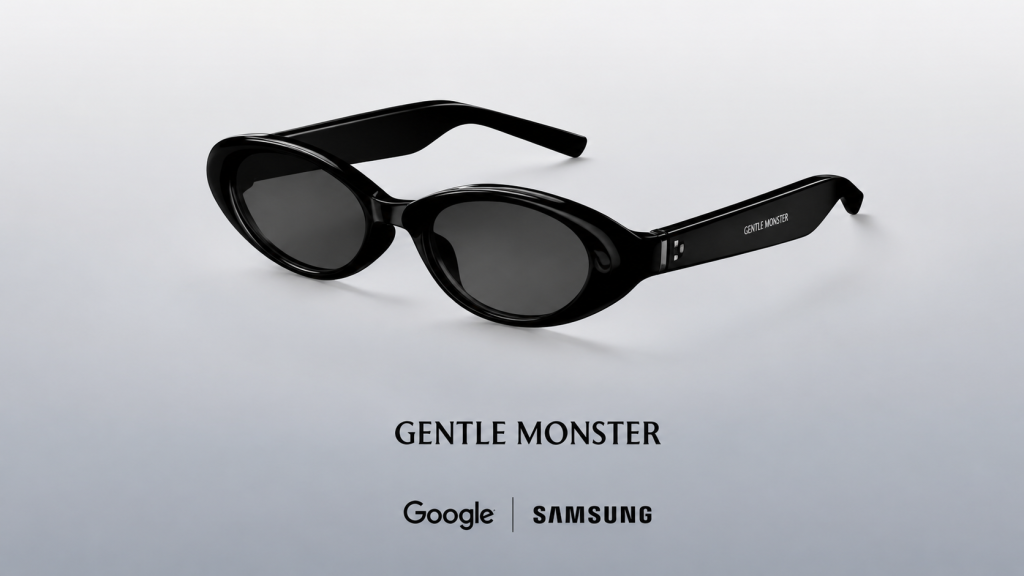
Google smart glasses with Gemini are coming later this year as part of the company’s Android XR strategy. The device was presented as a hands-free way to use AI during everyday activities.
What Google Announced
Google shared new details about its smart glasses during Google I/O 2026. The company said the glasses are part of Android XR, a platform developed with Samsung and Qualcomm for headsets, glasses and mixed-reality devices.
The first model to launch will be audio-focused smart glasses. According to Google, these glasses are expected to arrive at the end of this year. A version with a display is also part of the broader vision, but the audio model will come first.
Google also showed designs created with Gentle Monster and Warby Parker. This detail matters because smart glasses need to look comfortable and natural, not only advanced. For many users, design could be as important as the technology inside.
Key Features Known So Far
The Google smart glasses with Gemini will allow users to access the assistant by saying “Hey Google” or by touching the side of the frame. After that, users can ask questions, request help or manage simple tasks without taking out their phone.
Google says the glasses can provide step-by-step navigation, manage calls, send text messages and summarize missed messages. They can also play music through private speakers placed above the ear.
The glasses will also support photo and video capture. Google said users will be able to take images quickly and use AI tools to edit them with voice commands. This could make the device useful for travel, events and quick everyday moments.
Another important feature is real-time translation. According to Google, the glasses can translate voice and text, including menus, signs or spoken conversations. This could make them especially useful for travelers and people who communicate across languages.
Why It Matters for Wearable AI
Smart glasses have been a difficult product category for years. Companies must balance useful features, comfort, privacy, battery life and design. If one of these areas fails, users may not want to wear the product daily.
Google’s approach focuses on making AI available in the moment. Instead of opening a phone, users could ask Gemini for directions, context, translations or app actions while keeping their hands free.
The glasses will also work with both Android and iOS phones, according to Google. That wider compatibility could help the product reach more users, especially if the experience feels simple and reliable.
However, several important details remain limited at this stage. Google has not confirmed official pricing, exact market availability, battery life, final specifications or a specific release date beyond the end-of-year launch window.
What Comes Next for Google’s Smart Glasses
Google’s next challenge will be turning these features into a product people can comfortably use every day. The idea is promising, especially because Gemini could make the glasses useful for travel, communication, navigation and quick tasks.
Still, the success of the device will depend on details that remain unconfirmed, including price, battery life, camera privacy, availability and final design. As the launch window gets closer, these points will be key for understanding whether Google’s smart glasses can move from an interesting concept to a practical wearable for everyday users.