For decades, suspension design was governed by a relatively straightforward mandate: absorb road imperfections while keeping the vehicle stable. Today, that mandate has expanded dramatically. Modern suspension systems are no longer passive mechanical assemblies quietly doing their job beneath the chassis — they are intelligent, adaptive platforms that respond in real time to the driver, the road, and the vehicle’s own behavior.
From Springs and Shock Absorbers to Smart Architecture
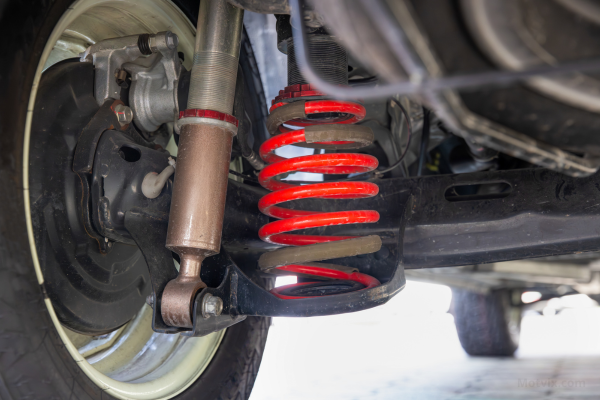
Traditional suspension setups relied on a fixed relationship between springs and dampers. Engineers calibrated that relationship during the design phase, and drivers simply lived with the result — a compromise between comfort and control that satisfied most needs without fully excelling at either.
The shift began with electronically controlled dampers, which gave engineers the ability to alter damping rates on the fly. From there, the technology evolved into fully adaptive suspension systems capable of reading road surface data, steering inputs, braking force, and lateral acceleration simultaneously. Today’s most advanced platforms process all of this information in milliseconds, adjusting each wheel independently to optimize both stability and comfort at once.
Active and Semi-Active Systems: What Sets Them Apart
It is worth distinguishing between the two dominant approaches now found across the market. Semi-active suspension systems adjust damping stiffness continuously but do not add energy to the system — they react to conditions rather than anticipate them. These are the systems most commonly found in mid-to-premium vehicle segments today, offering a meaningful upgrade over passive setups without the complexity of full actuation.
Active suspension systems go a step further. Using actuators powered by the vehicle’s electrical architecture, these platforms can raise or lower individual corners, counteract body roll proactively, and even prepare for road imperfections before the tire reaches them — a capability made possible by forward-facing cameras and sensor arrays that scan the road ahead.
The difference in driving feel is significant. Vehicles equipped with active suspension can maintain a near-flat body attitude through corners while still absorbing potholes with the composure of a luxury barge. It is a combination that was once considered technically contradictory.
The Role of Electrification and Software
The rise of electric vehicles has accelerated suspension innovation in an unexpected way. Battery-electric platforms tend to carry considerable weight concentrated low in the vehicle, which changes the dynamic demands placed on suspension components. Engineers working on EV architecture have been pushed to develop more sophisticated solutions to manage that mass effectively without sacrificing refinement.
At the same time, the software-defined vehicle movement has brought suspension calibration into the digital domain. Manufacturers can now update suspension behavior through over-the-air software patches, adjusting ride character, response thresholds, and adaptive logic without touching a single mechanical component. This turns suspension tuning from a fixed engineering decision into an ongoing, evolving service.
Safety Implications Beyond Comfort
It would be a mistake to frame modern suspension advancement purely as a comfort story. The safety implications are equally important. A suspension system that maintains optimal tire contact with the road at all times directly improves braking distances, reduces the risk of oversteer or understeer events, and enhances the effectiveness of electronic stability programs that work alongside it.
In critical moments — an emergency lane change, a sudden obstacle in the road — the difference between a well-calibrated adaptive suspension and a conventional passive setup can translate into meaningful real-world outcomes.
What This Means for the Road Ahead
As autonomous driving systems mature and vehicles take on more of the active driving responsibility, suspension technology will become even more central to the overall experience. A self-driving vehicle must deliver consistent, predictable, and comfortable motion without a human driver to compensate for shortcomings in chassis behavior. The suspension system, in that context, becomes part of the vehicle’s identity rather than simply its infrastructure.
For consumers today, the message is clear: the ground beneath your seat is smarter than it has ever been, and it is only getting more capable. Whether the priority is spirited driving, long-distance comfort, or everyday safety, modern suspension design is working harder than ever to deliver all three at once.