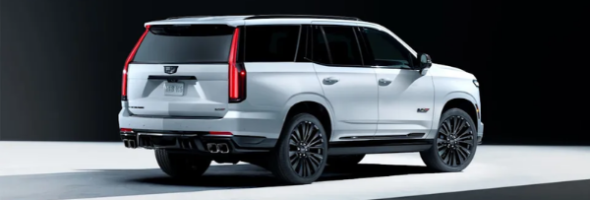
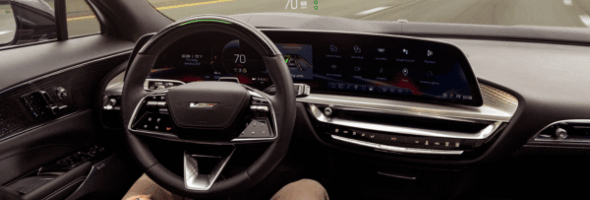
Most drivers never think about the wireless network powering their vehicle. They tap a screen, stream music, receive a navigation update, or get a safety alert — and it simply works. But behind that seamless experience, a fundamental shift is taking place. 5G connectivity is quietly changing the architecture of the modern automobile, and its effects are only beginning to surface in ways most consumers can see or feel.
Unlike its predecessors, 5G is not merely a faster version of the same technology. It represents a different philosophy of wireless communication — one built around low latency, high bandwidth, and the ability to handle enormous volumes of simultaneous data exchanges. For the automotive world, those characteristics translate into possibilities that were genuinely unreachable just a few years ago.
What Changes Inside the Cabin
The most immediate transformation for drivers and passengers is the quality and responsiveness of the in-cabin experience. Infotainment systems connected via 5G can deliver content, software updates, and cloud-based services with a speed that makes older LTE connections feel noticeably sluggish by comparison.
Over-the-air (OTA) software updates — already a defining feature of software-defined vehicles — become significantly more practical when backed by 5G. Large system updates that once took hours to download can be completed in minutes, reducing downtime and making it easier for automakers to continuously improve vehicle performance, security, and features without requiring a dealership visit.
Voice assistants and AI-powered cabin systems also benefit enormously. When natural language processing runs through cloud-based models rather than on-board chips alone, the quality and range of responses improves. A 5G connection gives those systems the bandwidth to access real-time intelligence and context, making interactions feel more natural and genuinely useful.
Safety and Infrastructure: The Bigger Picture
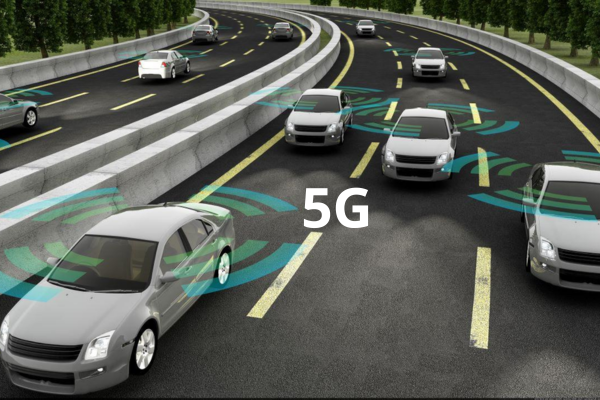
Beyond comfort and entertainment, 5G connectivity carries profound implications for road safety. Vehicle-to-everything communication — commonly referred to as V2X — is one of the most compelling use cases. This technology allows a car to exchange data with other vehicles, traffic signals, road infrastructure, and even pedestrians carrying connected devices.
The potential safety outcomes are significant. A vehicle approaching an intersection could receive a signal warning it of a cross-traffic hazard a full second or two before any camera or radar system on board could detect it. In scenarios where reaction time is the deciding factor, that kind of advance notice can be the difference between a near miss and a serious collision.
Emergency vehicle routing, real-time hazard alerts, and dynamic traffic management all become more effective when the underlying connectivity infrastructure is fast enough and reliable enough to act on live data without meaningful delay. 5G provides the foundation for those systems to function at their theoretical best.
The Road to Autonomous Driving Runs Through 5G
For higher levels of vehicle automation to become a practical reality on public roads, vehicles need to process and share enormous quantities of data continuously. While edge computing and onboard sensor systems handle much of this locally, 5G connectivity offers a critical supplement — allowing vehicles to access centralized processing power, receive precise map updates in real time, and communicate their status to surrounding infrastructure.
Automakers and technology companies developing autonomous systems increasingly view robust 5G network coverage not as a luxury but as a prerequisite. The deployment of that coverage, city by city and highway by highway, will shape the pace at which truly autonomous vehicles can be safely introduced at scale.
Still a Work in Progress
Despite its promise, 5G’s integration into the automotive world remains uneven. Network coverage varies significantly by region, and the hardware required to support full 5G capability adds cost and complexity to vehicle design. Standardization across manufacturers and telecom providers is still evolving, and cybersecurity considerations grow more urgent as vehicles become more deeply connected.
None of these challenges are insurmountable, and the trajectory of the industry is clear. Investment in connected vehicle infrastructure is accelerating, and most major automakers now treat embedded connectivity as a core feature rather than an optional upgrade.
Conclusion
5G connectivity may not be the most visible feature on a new vehicle’s specification sheet, but its influence on the driving experience is becoming increasingly difficult to overlook. From smarter cabins and faster software updates to safer roads and the long-term promise of autonomous mobility, the technology is laying groundwork that the automotive industry will build on for decades. The transformation is quiet — but it is very real.