At first glance, adaptive cruise control seems like a straightforward feature: the car maintains a set speed and slows down when a vehicle appears ahead. Simple enough. But beneath that seamless driving experience lies a remarkable web of sensors, algorithms, and real-time decision-making that pushes the boundaries of what modern automotive engineering can achieve.
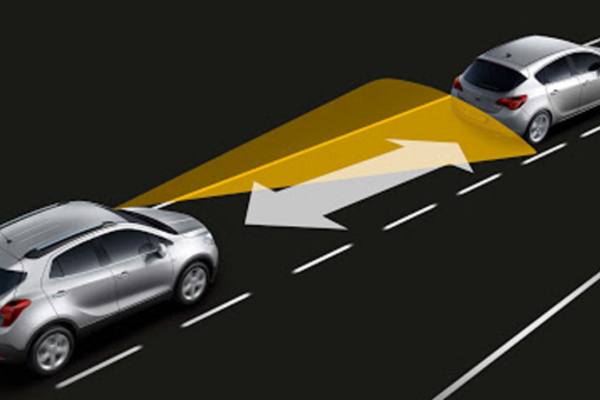
Understanding what actually happens inside an adaptive cruise control system helps explain why it represents one of the most significant leaps in everyday driving technology over the past two decades — and why getting it right is far harder than it looks.
A Symphony of Sensors Working in Parallel
Modern adaptive cruise control systems — often referred to as ACC — do not rely on a single sensor. Instead, they combine data from multiple sources simultaneously. Radar units, typically mounted behind the front grille or bumper, provide the backbone of distance and speed measurement. They are reliable in poor weather and low-visibility conditions, which makes them essential for highway driving scenarios.
Alongside radar, many systems now integrate forward-facing cameras that help identify not just the presence of a vehicle, but its type, relative position within the lane, and even its brake light status. Some higher-end implementations also incorporate LiDAR or ultrasonic sensors to add further layers of spatial awareness.
The challenge is not collecting this data — it is fusing it intelligently. Each sensor type has its own strengths and limitations, and the system must reconcile conflicting inputs in fractions of a second to produce a reliable picture of what is happening ahead.
The Algorithm Behind the Decision
Once sensor data is consolidated, a sophisticated control algorithm takes over. This software must constantly calculate the ideal following distance based on the current speed, road conditions, and the behavior of the vehicle ahead. It is not simply reactive — it is predictive.
When a car cuts into the lane, the system must evaluate whether that vehicle is truly an obstacle or simply passing through. False positives — braking unnecessarily — are just as problematic as false negatives. Both erode driver trust and, in the latter case, can create genuine safety hazards.
This is where machine learning and pattern recognition are increasingly playing a role. Newer systems are trained to distinguish between stationary objects on the side of the road, overhead structures like bridges, and real moving vehicles, a task that sounds intuitive to human drivers but demands enormous computational sophistication from a machine.
The Human Element: Comfort, Trust, and Calibration
Technology alone does not make adaptive cruise control effective. Engineers must also consider how the system feels to the driver. Abrupt braking or jerky acceleration can make even a technically perfect system feel unreliable or uncomfortable.
Automakers invest considerable effort in tuning the response curves of their ACC systems — how quickly they react, how smoothly they decelerate, and how gently they return to the set speed once an obstacle clears. These calibration decisions differ significantly between brands and even between models within the same manufacturer’s lineup.
Some systems also allow drivers to adjust the following distance preference, effectively personalizing the behavior. This adds another layer of complexity: the system must maintain safety thresholds regardless of user preference while still respecting the driver’s chosen setting.
Integration With the Broader Safety Architecture
Adaptive cruise control does not operate in isolation. In most modern vehicles, it is deeply integrated with other advanced driver-assistance systems — including automatic emergency braking, lane-centering assist, and blind-spot monitoring. These systems share sensor data and, in many cases, share control authority over the vehicle.
This integration is both a strength and a responsibility. When multiple systems work together cohesively, the result is a driving experience that feels genuinely intelligent. When they conflict or fail to communicate properly, the consequences can be disorienting or worse.
A Foundation for What Comes Next
Adaptive cruise control is, in many ways, the foundation upon which higher levels of vehicle automation are being built. The sensor arrays, data pipelines, and decision-making frameworks developed for ACC feed directly into the architectures that enable more advanced autonomous driving features.
For drivers today, it is a feature that — when well-executed — reduces fatigue, improves highway safety, and makes long journeys significantly less demanding. But behind that quiet, effortless performance is an engineering achievement of considerable depth, one that continues to evolve with every new model year.