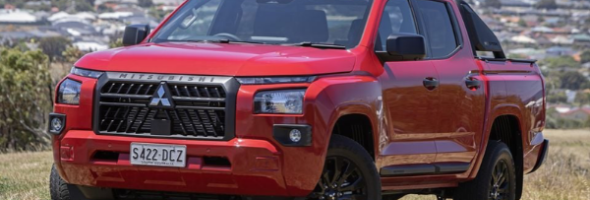
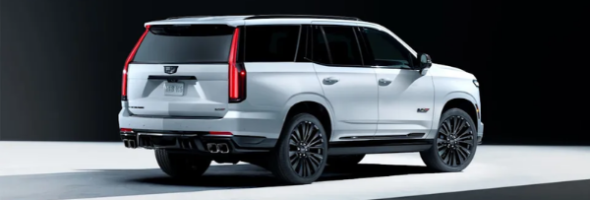
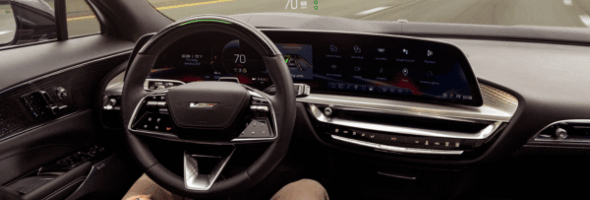
Not long ago, augmented reality head-up displays — commonly known as AR HUDs — were the kind of technology reserved for auto show concepts and bold executive promises. Today, they are appearing in production vehicles across multiple segments, from premium sedans to mainstream SUVs. The shift from novelty to necessity is happening faster than many industry observers anticipated, and it reflects a broader transformation in how automakers think about the driver’s relationship with information.
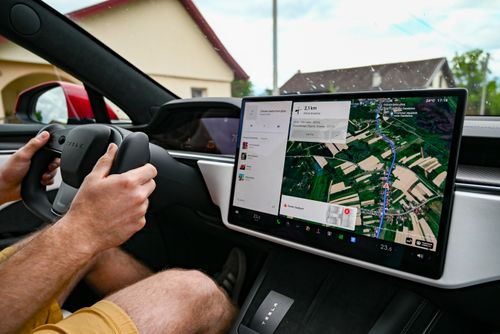
The core principle behind AR HUD technology is straightforward: instead of forcing a driver to glance down at a screen or instrument cluster, the system projects relevant data directly onto the windshield, overlaying it onto the actual road environment. Navigation arrows appear to float above the asphalt. Speed limits materialize beside real signs. Lane guidance lines follow the actual curvature of the road ahead. The result is a driving experience where critical information is always in the driver’s natural line of sight.
The Technology Behind the Transition
Several converging factors have made the mass-market adoption of AR HUDs not only possible but commercially viable. Advances in waveguide optics and projection hardware have dramatically reduced the physical footprint required to generate a large, high-resolution virtual image. Meanwhile, the processing power needed to run real-time augmented overlays — once a significant constraint — is now readily available through modern vehicle computing platforms.
Equally important is the maturation of the sensor ecosystem surrounding these displays. AR HUDs do not operate in isolation; they depend on precise data from GPS systems, cameras, radar sensors, and increasingly, high-definition mapping services. As these components become more accurate and more affordable, the quality and reliability of AR projections improve proportionally. The technology is, in a very real sense, benefiting from the same development cycle that is driving autonomous driving research forward.
Safety as the Central Argument
Perhaps the most compelling reason AR HUDs are gaining traction is their potential to meaningfully improve road safety. Distraction remains one of the leading contributors to traffic incidents worldwide, and a significant portion of that distraction stems from drivers looking away from the road to consult navigation, check speed, or read alerts. By bringing that information into the driver’s primary field of vision, AR HUDs address the problem at its root rather than simply making dashboard screens larger or more intuitive.
Regulators and safety organizations are beginning to take note. As advanced driver-assistance systems become more sophisticated, the need for an interface that communicates their status clearly and instantly is growing. An AR HUD that highlights a detected pedestrian at the edge of a dark road, or that draws a visual cue around a vehicle entering a blind spot, translates complex sensor data into immediately actionable human understanding.
Moving Down the Market
For years, AR HUD technology was associated almost exclusively with luxury and flagship vehicles. The economics of early adoption meant that only high-margin models could absorb the development and component costs. That calculus is changing. As production volumes increase and supply chains mature, automakers are finding ways to bring scaled-down but still meaningful versions of the technology to mid-range and even entry-level vehicles.
This democratization follows a familiar pattern in automotive technology. Features that debut in flagship models — adaptive cruise control, blind-spot monitoring, touchscreen infotainment — eventually become expected across the entire lineup. AR HUDs appear to be following the same trajectory, pushed further along by competitive pressure and consumer expectations shaped by smartphone interfaces and gaming environments.
What Comes Next
The evolution of AR HUD technology is far from complete. Developers are exploring wider projection fields that could eventually cover the entire windshield rather than a limited central zone. Integration with AI-driven predictive systems could allow displays to anticipate the driver’s needs based on context, route, and conditions, rather than simply reacting to inputs. Some concepts suggest that future systems may even adjust their visual intensity and content based on the driver’s gaze direction, making the experience genuinely responsive.
What is clear is that the fundamental question surrounding AR HUDs has shifted. The debate is no longer whether the technology works or whether drivers will accept it. The conversation now centers on how quickly it can scale, how deeply it can integrate with vehicle intelligence, and how creatively automakers will apply it to differentiate their products. Augmented reality has moved from the windshield of tomorrow to the dashboard priority of today.