One of the most anticipated electric vehicles in the premium off-road segment will have to wait considerably longer than previously expected. Jaguar Land Rover has put a two-year pause on the development of the next-generation Land Rover Defender, sources familiar with the situation have confirmed to multiple outlets including The Times and Automotive News. As a direct consequence, the battery-electric version of the Defender — previously expected around 2028 or 2029 — has now been pushed into the early 2030s.
A Best-Seller That Is Too Successful to Rush
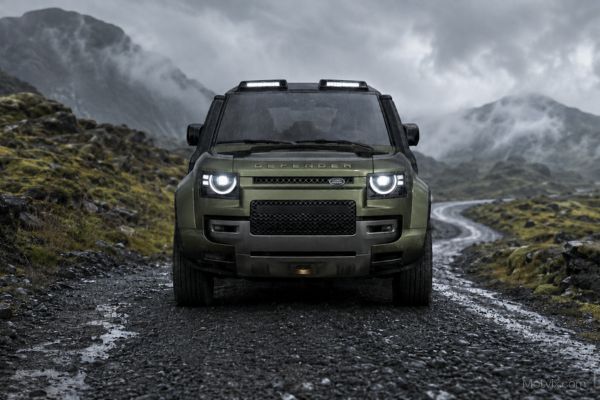
The timing of the delay is unusual, because the reason JLR has given internally is not a lack of confidence in the Defender — it is the opposite. JLR is understood to have told staff that the two-year pause on the next version of the Defender is down to the current model’s success. The company is selling 110,000 Defenders a year, almost a third of the 350,000 cars it sold in total in its financial year to March 2026.
A vehicle that accounts for one in every three cars a company sells is not easy to replace. Rushing a redesign risks disrupting production, confusing buyers, and cannibalizing the existing model before its successor is ready to take over. From a pure business logic standpoint, keeping the current Defender in production — where it is clearly meeting demand — while redirecting development resources elsewhere is a defensible decision.
The company has previously said that the architecture of the full-sized Land Rover Defender, relaunched in late 2019, means it is too difficult to incorporate an electric vehicle battery. As a result, customers would have to wait for the fully redesigned version to be launched. That generational redesign had been anticipated in 2028–29, although no date had formally been announced. Sources familiar with the situation said it will now be delayed into the 2030s.
The Tariff Pressure Behind the Decision
The Defender’s delay is not happening in a vacuum. JLR is navigating a genuinely difficult trade environment, particularly in North America — its largest single market. North America is JLR’s biggest single market at 28 per cent of sales. Earlier this month, the company announced it would begin manufacturing the Defender in the United States in conjunction with Vauxhall owner Stellantis, in order to avoid Trump’s tariffs. American-bound Defenders are currently designed and engineered in the UK, with engines built in Wolverhampton, but final assembly takes place in Slovakia — meaning the vehicle attracts US import tariffs of 15 per cent rather than the 10 per cent rate that applies to UK-built vehicles.
Moving Defender assembly to the United States addresses the tariff issue for American buyers. But it also means JLR has to manage a production transition at exactly the same time it might otherwise be preparing a full redesign — making the delay of the next-generation model a practical necessity as much as a strategic choice.
JLR’s new chief executive, PB Balaji, is under pressure to cut costs following a tumultuous 18 months for the carmaker. The company’s FY2026 financials were considerably bruised by last year’s cyberattack, which disrupted operations and order management for an extended period.
What JLR Is Prioritizing Instead
With the next-generation Defender and its electric variant pushed back, JLR’s electric vehicle roadmap is refocusing around other models. The Range Rover Electric and Range Rover Sport Electric will use the Modular Longitudinal Architecture and be built at Solihull, while the first Electric Modular Architecture sport-utility vehicle will be a new Range Rover family model assembled at Halewood. The Range Rover Electric is scheduled to be revealed later in 2026, with launch in the second half of JLR’s 2026–27 financial year.
The Range Rover Electric now becomes the centerpiece of JLR’s near-term EV story. As the brand’s most profitable and highest-profile nameplate, it is a logical priority — the vehicle most likely to attract buyers who are ready to spend significant sums on a premium electric SUV.
The compact baby Defender remains on schedule and is expected to continue development, which gives Land Rover at least one Defender-family product moving forward in the near term. The smaller model targets a different buyer profile than the full-size Defender and sits on a different platform, meaning its timeline is not affected by the full-size model’s pause.
Where the Defender Goes From Here
JLR has not officially confirmed the delay through a formal press statement, and the company has not published a revised timeline. The information comes from sources cited by The Times and confirmed by Automotive News reporting published today. JLR’s official position maintains that it will sell electric versions of all its luxury brands, but has declined to specify when an electric Defender will be available.
For Land Rover enthusiasts and potential buyers, the practical implication is clear: if you want an electric Defender, the wait is now significantly longer than the industry had assumed. The current combustion and mild-hybrid Defender will remain the only full-size option available through at least the late 2020s.
What This Means for the Segment
The delay is noteworthy for the broader premium electric off-road segment, which has been growing around models like the Mercedes-Benz G-Class EV, the upcoming electric Toyota Land Cruiser, and various luxury electric truck offerings from American brands. The Defender’s absence from that category for another half-decade gives competitors more time to establish themselves before the most iconic British off-roader arrives in electric form.
Land Rover hasn’t officially confirmed the reported delays, so the exact timing remains unclear. But multiple credible sources now point to the same conclusion: the electric Defender is a 2030s vehicle, and the industry will need to adjust its expectations accordingly. When it does arrive, it will need to be exceptional — because the competition will have had years more to develop.