Mitsubishi is widening the appeal of the Eclipse Cross EV in Europe with two new battery configurations.
From November 2026, the electric SUV is due to offer a 67-kWh lithium iron phosphate pack for drivers who prioritize value and routine use, plus an upgraded 89-kWh nickel-manganese-cobalt battery for customers who want maximum range.
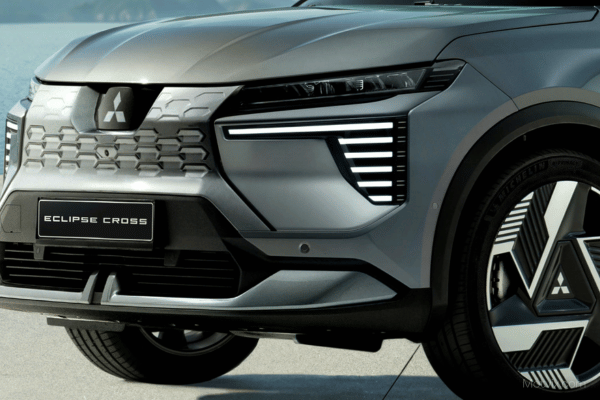
Both versions use a 220-horsepower electric motor and can tow up to 1,100 kilograms.
The strategy is positive because it recognizes that electric-car buyers do not all need the same battery. A larger pack can reduce charging stops on long journeys, but it may also add cost and mass that a city-focused customer rarely uses.
A smaller LFP battery can be a practical alternative when most trips are predictable and home or workplace charging is available. Offering both lets the vehicle fit the owner, rather than forcing every owner into the most expensive specification.
The 67-kWh LFP version
Mitsubishi gives the 67-kWh version an official WLTP range of up to 472 kilometers.
Its peak DC charging rate is listed at 165 kW, with a 15-to-80-percent charging estimate of 24 minutes under suitable conditions.
For AC charging, the vehicle supports 11 kW and, where available, 22 kW. That higher AC capability can be valuable at workplaces and public destinations, where a driver may park for an hour or two instead of making a brief motorway stop.
LFP chemistry has become popular because it avoids nickel and cobalt, typically offers strong cycle life and can deliver stable performance at a competitive cost.
It also tends to have lower energy density than nickel-rich chemistries, so packaging and vehicle efficiency remain important.
Mitsubishi’s 472-kilometer claim suggests the smaller battery is intended to be a full-use option, not merely a short-range entry model.
As always, the WLTP figure is a standardized comparison tool. Real range will change with speed, weather, load, elevation and wheel choice.
Drivers planning winter motorway travel should keep a reserve and use route-planning tools that account for temperature and charger availability.
The 89-kWh long-range upgrade
The larger battery grows from the previous 87 kWh to 89 kWh and lifts the official range from 635 to 650 kilometers.
More important for travel time, Mitsubishi says a 15-to-80-percent DC session now takes 28 minutes—nine minutes less than before—even though the stated peak is 150 kW.
Peak power alone never tells the whole charging story; the curve across the session determines how long a vehicle actually occupies the charger.
This version also supports 11- and 22-kW AC charging. A 650-kilometer WLTP rating places the Eclipse Cross EV in useful long-distance territory, at least on paper.
It should allow many family journeys to begin with several hours of driving before the first charging stop. The larger pack may also suit owners without daily home charging, although public-charging cost and local infrastructure still need to be considered.
Mitsubishi has not announced final pricing for the two updated batteries, so it would be premature to declare one the better value. The price gap, standard equipment and local incentives will determine how compelling each model becomes.
Shared performance keeps the choice simple
Both battery versions produce 220 horsepower, which means customers are not being asked to give up normal performance when choosing the smaller pack.
That simplifies the buying decision: range, charging pattern and price can take priority over a complicated power hierarchy.
For a family crossover, consistent output across the lineup is often more useful than reserving adequate acceleration for expensive trims.
The 1,100-kilogram towing limit also broadens the vehicle’s practical role. It should cover small trailers and selected leisure equipment, subject to local license rules and the vehicle’s certified limits.
Towing will increase energy consumption, sometimes substantially, so route planning becomes especially important. The same is true when carrying passengers, luggage or roof-mounted equipment.
Warranty support for a changing market
Mitsubishi pairs the vehicle with a five-year or 100,000-kilometer general warranty and describes a conditional program extending coverage to eight years or 160,000 kilometers.
The high-voltage battery is covered for eight years or 160,000 kilometers, while corrosion protection extends to twelve years. Roadside assistance can also continue for up to eight years under the stated program conditions.
Owners should read local terms carefully because maintenance requirements, transfer rules and market-specific conditions can affect coverage.
Nevertheless, a long battery warranty helps address a common question from first-time EV buyers: whether an expensive component will remain supported beyond the early years of ownership.
Transparent health guarantees and accessible diagnostic reports will become even more important as the used-EV market grows.
Better segmentation can accelerate adoption
The Eclipse Cross EV update illustrates a healthy shift in the market. Early electric vehicles were often offered with one battery and a narrow set of use cases.
Mature product lines increasingly provide a choice similar to fuel-tank size and engine output in conventional cars, but with chemistry, charging and range added to the equation.
For a commuter with a home charger, the 67-kWh LFP model may cover daily travel with a comfortable reserve and reduce the cost of carrying unused capacity.
For a high-mileage driver or frequent road-trip family, the 89-kWh version offers 178 kilometers more official range and a faster charging session than the outgoing battery.
Neither is universally superior; each is optimized around a different pattern.
That is why the announcement is more important than a two-kilowatt-hour increase. Mitsubishi is giving buyers a clearer, more flexible way into an electric crossover.
Final prices and independent efficiency tests will decide the value equation, but the technical package already points toward a market where choosing an EV requires fewer compromises and more useful choices.