The Space Between Imagination and Reality
Every production vehicle that rolls off an assembly line carries the DNA of something far more daring. Concept cars — those striking, often impractical machines unveiled at motor shows — are not simply exercises in creativity for their own sake. They are deliberate, calculated steps in a long journey from a designer’s sketch to a car you can actually buy.

Understanding how that journey works reveals a great deal about how the automotive industry balances ambition with commercial reality.
What Concept Cars Are Really For
At their most basic level, concept cars serve as public-facing laboratories. Automakers use them to gauge reactions to new design languages, emerging technologies, and shifts in brand identity — all before committing billions of dollars to full-scale production.
Beyond the audience response, concepts allow engineering and design teams to explore ideas without the constraints of regulatory compliance, production costs, or supply chain limitations. A concept can feature a windshield that stretches across the entire roof, seating that rotates to face the rear, or a dashboard made entirely of a single curved screen. None of those features may survive into production intact — but elements of each very likely will.
The Filter Between Vision and Volume
The transformation from concept to production model is rarely a straight line. It involves a complex filtering process in which designers, engineers, marketing teams, and executives negotiate what stays, what adapts, and what disappears entirely.
Proportions are often among the first things to change. A concept may feature dramatically short overhangs, an impossibly low roofline, or wheels pushed to the very corners of the body. These proportions communicate a visual intent — a sense of planted confidence or aerodynamic purpose — and while production engineering often forces compromises, designers work hard to preserve as much of that original visual energy as possible.
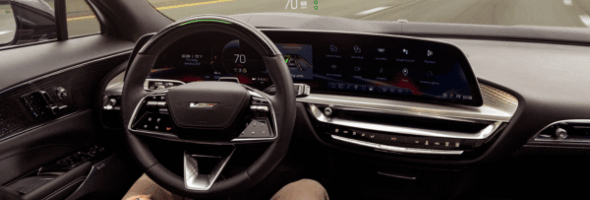
Interior concepts face similar scrutiny. A cabin that looks revolutionary in a show environment must also accommodate real human bodies, safety standards, and the durability expectations of mass-market consumers. What survives tends to do so in refined, scaled-back form: a distinctive material choice, an unconventional instrument cluster layout, or a signature ambient lighting system.
When the Concept Becomes a Promise
Not all concepts are created equal. Some function primarily as design studies, with no intention of reaching production. Others, however, are strategic signals — a manufacturer’s way of announcing where the brand is heading before the tooling investment is fully committed.
In these cases, the concept acts almost as a public contract with the consumer. The closer a production model stays to its concept origins, the stronger the sense of authenticity and brand integrity. Automakers that consistently deliver production cars faithful to their concept previews tend to build stronger design reputations over time.
The rise of electric vehicles has given the concept car renewed relevance. Because electric platforms allow for more radical cabin layouts — eliminating transmission tunnels and repositioning components with greater freedom — designers have more room to experiment in ways that can realistically survive into production.
Design Continuity as a Competitive Advantage
Some of the most celebrated production vehicles in recent automotive history trace their character directly to a concept that preceded them by several years. The visual coherence between an original concept and its eventual production form signals intentionality — proof that a design team had a clear, committed vision and the organizational support to see it through.
This kind of continuity is increasingly recognized as a competitive advantage. In a market where consumers are more design-literate than ever, the story of how a car looked before it became real carries genuine emotional weight.
The Sketch That Starts Everything
In the end, the concept car remains one of the most honest windows into an automaker’s ambitions. It is where fearlessness is permitted, where the future is rendered in clay and carbon fiber before spreadsheets have the final say.
The showroom model that follows may be more practical, more affordable, and more compliant — but it carries within it the memory of something bolder. And that tension between the dream and the deliverable is precisely what keeps automotive design one of the most compelling creative disciplines in the world.