The rumor became an official announcement in just thirteen days. Honda Motor Co., Ltd. and Mitsubishi Motors Corporation have signed a memorandum of understanding for the development of a Honda model based on the Mitsubishi Triton pickup truck. This marks the first initiative between the two companies for complementary supply to each other’s product lineups. The new Honda model is scheduled to go on sale in the ASEAN market in 2028.
The signing was confirmed directly by both companies’ official communications on October 22, 2026, making it one of the most significant product announcements from the Honda-Nissan-Mitsubishi alliance this year. Honda now has its first body-on-frame pickup truck program — built not from scratch, but through one of the most commercially efficient paths available to it.
Why Honda Needed a Pickup and Why Now
Honda sells no pickup in ASEAN markets today. That absence has become increasingly costly as the Southeast Asian market continues to reward body-on-frame mid-size trucks above almost all other vehicle categories. In Thailand, Indonesia, the Philippines, and Vietnam — four of the region’s largest automotive markets — mid-size pickups are not niche products. They are the backbone of personal and commercial transportation, tools for farmers, tradespeople, and families who need genuine utility in markets where road infrastructure and load requirements demand something more capable than a crossover.
Honda sees the broader push in the body-on-frame truck market, and it wants a piece of the action. As part of the collaboration, Honda says it will primarily market this truck in Southeast Asia, as the Japanese automaker focuses on fending off competition from China. Chinese brands — led by Great Wall Motor’s Poer pickup and BYD’s expanding commercial vehicle lineup — have been moving aggressively into ASEAN truck markets. Honda’s absence from the segment left it with no product to deploy in response.
What the Triton Brings to the Partnership
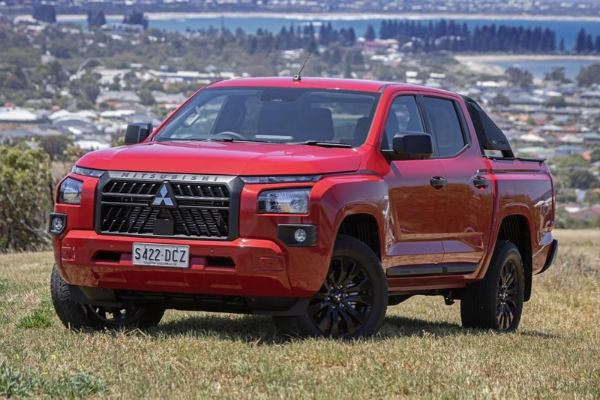
The Mitsubishi Triton, which is the subject of this complementary vehicle supply arrangement, is a one-ton pickup truck built on a robust ladder frame. It is one of Mitsubishi Motors’ global strategic models that is in high demand, particularly in the ASEAN region.
The Triton is not a new or unproven platform. It has been one of Mitsubishi’s most important global models for decades, competing directly with the Toyota Hilux and Ford Ranger in markets across Asia, Australia, the Middle East, and Latin America. Mitsubishi supplies the latest Nissan Navara for markets such as Australia and New Zealand, where the midsize pickup truck has an alter ego. Adding a Honda version to that badge-sharing arrangement means the same fundamental truck will now carry three Japanese brand identities — Mitsubishi, Nissan, and Honda — across different markets, each serving a buyer base that the platform’s base engineering can support.
Honda Motor and Mitsubishi Motors said Thursday they had agreed to have Honda begin selling Mitsubishi-made pickup trucks in 2028, part of a nascent alliance of Japanese automakers aligning to take on Toyota Motor’s camp. The competitive framing matters. Toyota dominates ASEAN automotive markets across nearly every segment. The Hilux is consistently the region’s best-selling pickup. For Honda to compete against that without developing an entirely new ladder-frame platform — an investment that would take a minimum of five years and billions of dollars — borrowing the Triton’s architecture is the pragmatic response. nikkei
What Honda Gets and What Mitsubishi Gets
The commercial logic is clean for both sides. Through this collaboration, Honda will add a pickup truck model to its lineup primarily in the ASEAN market, where it does not currently offer pickup truck models, enabling Honda to enhance its product lineup quickly and efficiently in the market. Meanwhile, this collaboration will enable Mitsubishi Motors to increase production volume and improve capacity utilization at its production plant in Thailand. The two companies reached this agreement after determining that this collaboration would generate synergies for both companies.
For Honda, the gain is speed and coverage. A product that would otherwise require years of platform development arrives in approximately two years through an existing, proven architecture. For Mitsubishi, the gain is volume — additional unit production from its Thai plant improves factory utilization, reducing per-vehicle fixed costs and strengthening the economics of a facility that was already producing the Triton for its own brand and the Navara for Nissan.
What the Honda Version Will Look Like
Honda hasn’t revealed the new truck’s name or shown what it will look like. The MOU specifies that it will be “based on” the Triton, which is the standard language used for badge-engineered vehicles where one manufacturer’s platform and manufacturing is adapted — typically with changes to exterior styling, interior trim, and sometimes powertrain calibration — for another brand’s identity and dealer network.
It may be awhile before we see Honda’s version, as even Honda is using Mitsubishi’s own Triton as the reference image for its truck. Honda has not confirmed development (at least for now), but it’s possible the partnership will continue to net Honda more models to flesh out its truck lineup over the coming years.
The name is an open question. Honda’s current truck in North America is the Ridgeline — a unibody vehicle that has carved out its own identity distinct from traditional body-on-frame pickups. The ASEAN body-on-frame truck will need its own name and visual identity to establish itself as a Honda product in markets where the Ridgeline does not exist. Honda’s Asia-Pacific design and marketing teams will determine what that looks like before the 2028 launch.
Will It Reach the US or Other Markets?
The odds of Honda’s 2028 body-on-frame pickup making it to the US are slim to none. Considering Mitsubishi is partnering with Nissan to slap its badge on the Frontier for US sale, maybe Honda could take a similar route.
The US market has specific import tariff structures, safety regulations, and emissions certifications that make bringing an ASEAN-market pickup to North America more complicated than simply changing the badge. The $169-billion chicken tax on imported light trucks has historically made direct imports of foreign-assembled pickups economically unviable without significant restructuring of the supply chain or manufacturing.
However, if the ASEAN launch is successful and the platform proves reliable and well-received, the partnership does establish the groundwork for Honda to pursue a North American pickup strategy more ambitiously — whether through expanded Mitsubishi sourcing, a US production arrangement, or eventual development of a next-generation Honda-engineered platform that draws on the alliance’s shared resources. That is a longer-term story. The 2028 ASEAN launch is where this chapter begins.
The Bigger Alliance Picture
Honda Motor and Mitsubishi Motors confirmed the deal as part of a nascent alliance of Japanese automakers aligning to take on Toyota Motor’s camp. Honda and Nissan’s SDV software agreement from late August, the expanded Mitsubishi participation in that framework, and now this pickup truck deal represent a growing set of tangible outcomes from a cooperation structure that was still theoretical at the start of 2026.
The Honda-Nissan-Mitsubishi alliance is not a merger, and none of the three companies has suggested it will become one. What it is becoming is a functional network of specific product, technology, and manufacturing agreements that collectively give each brand capabilities it could not achieve cost-effectively on its own. The Triton-based Honda pickup is the clearest commercial expression of that network so far — a real product, with a real launch date, that will reach real buyers in 2028.