General Motors is finally moving into the hybrid segment in a meaningful way — and its CEO has confirmed the pivot publicly. General Motors CEO Mary Barra told analysts Tuesday that hybrids are coming in multiple segments with no added capital spending or engineering, as fuel prices drive demand. Dealers can expect hybrids in key segments, but models and timing remain unannounced.
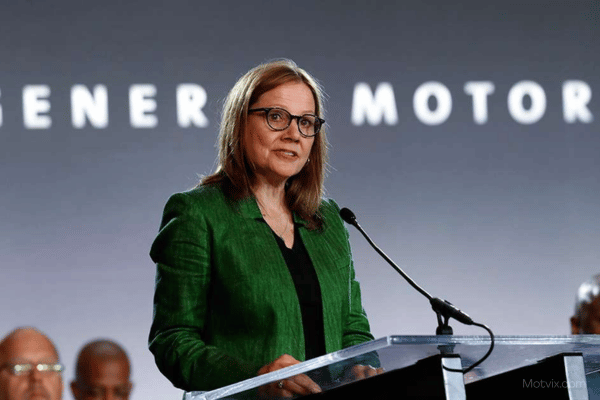
The announcement, made at GM’s Forward event in New York alongside a series of other technology announcements, confirms a strategic shift that industry analysts have been anticipating for months. For years, GM placed its electrification bets almost entirely on battery-electric vehicles. The market’s response — surging hybrid demand, falling EV sales after the expiration of the federal tax credit, and rising fuel prices — has changed the calculus entirely.
A Market That Moved Without GM
The context behind Barra’s announcement is as important as the announcement itself. Hybrid vehicles now represent approximately 18% of US new-vehicle retail sales — a record that was set in August and has held at elevated levels since. That share has been captured almost entirely by brands that were already offering competitive hybrid powertrains: Toyota, Honda, Hyundai, and Kia.
GM has been largely absent from this trend. The company’s hybrid presence in the US consumer market has been effectively limited to a single offering: the Corvette E-Ray, a high-performance, low-volume application of hybrid technology that does not address the mainstream segments where most buyers are making their powertrain decisions. In the compact and midsize crossover segments — the Equinox, Blazer, Trax, and Buick Encore GX — GM has had no hybrid option as demand for electrified powertrains in those categories surged.
That absence has been costly. The Hyundai Tucson Hybrid and Kia Sportage Hybrid together are capturing buyers who might otherwise have considered a Chevy Equinox or Blazer. The Ford Explorer Hybrid and Maverick Hybrid are reaching F-Series buyers who want better fuel economy without switching to an electric vehicle. Every hybrid sale that goes to a competitor is a vehicle that did not go to a GM dealer.
How GM Gets There Without Extra Spending
The most significant element of Barra’s announcement is the cost structure claim: new hybrid models will arrive across multiple segments without requiring additional capital spending or engineering resources. That claim, if accurate, points to an approach that uses existing platforms and components.
GM’s current generation of electric vehicle platforms — the Ultium architecture — is designed for flexibility in powertrain configuration. While it was primarily developed for battery-electric applications, its modular approach to power electronics, motor design, and battery packaging theoretically allows for hybrid configurations that share components with the EV lineup. Rather than developing an entirely new hybrid architecture from scratch, GM appears to be leveraging what it has already built.
This approach is consistent with how Toyota has handled hybrid-to-electric platform sharing — using common motor designs, power electronics, and battery management software across both powertrains to reduce development cost and manufacturing complexity. If GM has achieved a similar level of commonality in its electrification infrastructure, adding hybrid variants to existing vehicle lines becomes an engineering exercise rather than a capital-intensive new program.
Which Segments and When?
Barra did not disclose which specific vehicle segments would receive hybrid powertrains, nor did she give a timeline beyond suggesting that dealer availability is coming. Industry analysts following the announcement pointed to the Chevy Silverado, Chevy Equinox, GMC Sierra, and Buick Enclave as the most commercially significant segments where hybrid availability would have the greatest impact on GM’s competitive position.
A Silverado hybrid would be particularly significant. The F-150 PowerBoost hybrid is one of Ford’s best-selling powertrain choices in the full-size truck segment, demonstrating that there is genuine demand for hybrid capability in America’s top-selling vehicle category. GM has watched Ford capture that demand without a competing hybrid option. A Silverado or Sierra hybrid, arriving in 2027 or 2028, would directly address that gap.
In the crossover segment, the Equinox is GM’s most important vehicle in terms of volume. A hybrid Equinox priced competitively against the Toyota RAV4 Hybrid and Hyundai Tucson Hybrid would give GM dealers a meaningful tool in the most competitive segment of the US market. The existing Equinox EV’s price points have not allowed it to serve as a complete answer to that competitive challenge.
The Fuel Price Factor
Barra’s reference to rising fuel prices as a demand driver is specific and timely. National average gasoline prices have remained above $4 per gallon for several months, a level that historically accelerates consumer interest in fuel-efficient vehicles. The expiration of the $7,500 federal EV tax credit last year removed the financial subsidy that had been nudging buyers toward full electrification. Without that incentive, the economic case for a hybrid — which delivers meaningfully better fuel economy than a conventional vehicle without the charging infrastructure requirement of a full EV — has strengthened.
GM’s own data, through OnStar and its dealer network, presumably shows the same pattern that every other measure of buyer intent is showing: the segment of US buyers who want an electrified powertrain but are not ready to go fully electric is larger than the segment ready to commit to a battery-only vehicle. Hybrids serve that buyer. GM has not had a competitive product to offer them.
What This Means for the Competition
Toyota, Honda, Hyundai, and Kia have a head start measured in years. Toyota’s hybrid system is on its sixth generation, refined over nearly three decades of production and millions of real-world miles. Honda’s hybrid lineup has similarly deep institutional knowledge behind it. Hyundai and Kia’s hybrid systems, while newer, have proven highly competitive in terms of fuel economy and reliability.
GM entering hybrid competition across multiple segments will take time to build the same level of consumer trust and product refinement. The first generation of hybrid Silverados or Equinoxes will face buyers who have formed strong opinions about what a reliable, high-value hybrid looks and feels like — opinions shaped largely by Toyota and Hyundai products.
That competitive gap is real, but it is not insurmountable. GM’s Ultium technology has demonstrated competence in its EV applications, and the brand recognition and dealer network that GM brings to any segment it enters are genuine advantages. A well-executed hybrid Silverado in 2027 or 2028 could recapture truck buyers who have been buying the F-150 PowerBoost by default.
The Bigger Picture
GM’s hybrid announcement is the clearest signal yet that the US auto industry’s EV transition is not moving on the timeline that automakers had publicly committed to just two years ago. The company that unveiled plans to sell only zero-emission vehicles by 2035 is now announcing hybrid powertrains across multiple segments as a business necessity driven by market demand.
That is not a failure of vision. It is a response to what buyers are actually choosing. And what buyers are choosing, in 2026, is hybrids in numbers that no one predicted three years ago. GM is late to that party — but it is now clearly planning to attend.