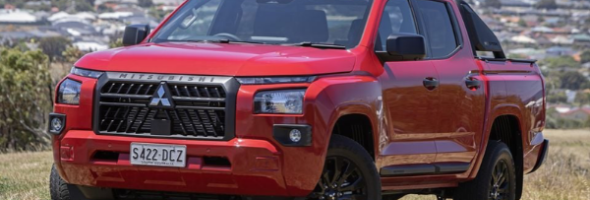
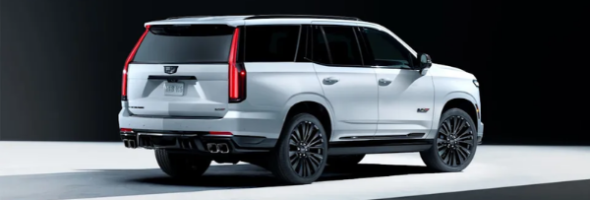
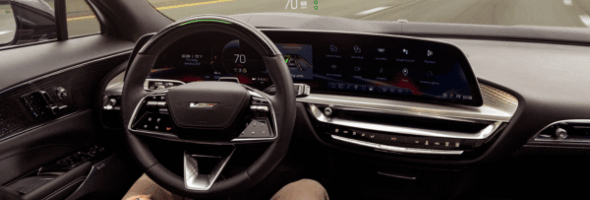
There is a moment — lasting no more than a fraction of a second — when you see a car for the first time and already know whether it feels fast, heavy, elegant, or aggressive. No badge, no specification sheet, no test drive required. This instant judgment is not arbitrary. It is the result of proportions: the precise relationship between lengths, heights, volumes, and angles that automotive designers manipulate with extraordinary deliberateness.
Proportion is the silent grammar of automotive design. It operates beneath the level of conscious thought, yet it governs almost everything we feel when we look at a vehicle.
The Language of Ratios
At the most fundamental level, a car’s visual impact is determined by a set of geometric relationships that designers carefully engineer long before any surface detail is applied. The most consequential of these is the wheelbase-to-height ratio. A long wheelbase combined with a low roofline communicates speed, tension, and performance. Conversely, a short wheelbase with a taller body reads as practical, upright, and utilitarian — useful for an SUV or van, but antithetical to the visual language of a sports car.
Equally important is the greenhouse-to-body ratio — the proportion of glass and cabin structure relative to the lower body mass. Performance-oriented vehicles tend to minimize the greenhouse, pushing it rearward and keeping it visually compressed. The result is a silhouette that appears to crouch, as if preparing to launch forward. Luxury sedans and grand tourers often stretch the hood dramatically, placing the passenger compartment far back in the body to suggest power concentrated at the front.
Stance and the Illusion of Motion
A car that appears to be moving while standing still has achieved something remarkable. This illusion is largely a function of stance — the visual relationship between the tires, wheel arches, and the vehicle’s overall mass distribution. Wide-set wheels that fill their arches confidently, combined with a body that sits close to the ground, generate a sense of planted authority. Designers speak of a car “gripping” the road visually, even in a photograph.
The angle of the windshield also plays a decisive role. A steeply raked A-pillar slices through the air visually, reinforcing the impression of aerodynamic intent. When that angle is mirrored in the rear roofline — in a fastback silhouette — the entire body reads as a single flowing form moving in one direction.
Why Proportions Cannot Be Corrected by Details
One of the most persistent lessons in automotive design history is that surface detail cannot rescue poor proportions. An aggressive grille, dramatic LED signatures, sculpted flanks, and intricate wheel designs may attract attention in isolation, but if the underlying volumetric relationships are incorrect, no amount of graphic detail will produce a satisfying whole. The eye senses incoherence even when the mind cannot immediately articulate why.
This is why the most enduring automotive designs — those that remain visually compelling across decades — are invariably built on exceptional proportions first. Details age; proportions endure.
The Digital Era and Its Proportional Challenges
The transition toward electric vehicles is creating genuine tension in automotive proportion. Removing the traditional combustion powertrain eliminates the long hood as a structural necessity, forcing designers to rethink how to express power and dynamism without the dimensional cues that generations of car culture have internalized. Some manufacturers are experimenting with reimagined front volumes and altered weight distributions, seeking new proportional languages appropriate to an electric age.
This is not a design crisis — it is a design opportunity. The rules are being renegotiated, and the studios that understand proportion at its deepest level will be best equipped to write them.
Conclusion: The Mathematics Beneath the Beauty
Speed has always been as much a visual experience as a physical one. The cars that move us emotionally — that we remember, desire, and admire — earn that response through geometry before they earn it through performance. Proportions are the foundation upon which everything else in automotive design is built, and understanding them is essential to understanding why some cars feel inevitable and others feel merely assembled.
In the end, the most powerful line a designer can draw is not a crease on a door panel. It is the horizon line that defines where a car ends and the road begins.