Not long ago, a matte-finished vehicle was a rare sight — something reserved for custom shops, auto show showstoppers, or the most dedicated enthusiasts willing to accept the high maintenance demands that came with it. Today, matte paint is a factory option at automakers ranging from luxury stalwarts to performance-focused brands, and its presence on public roads is increasingly ordinary. That shift is worth examining closely, because it says something meaningful not just about design trends, but about the evolving relationship between drivers and their cars.
What Matte Actually Communicates
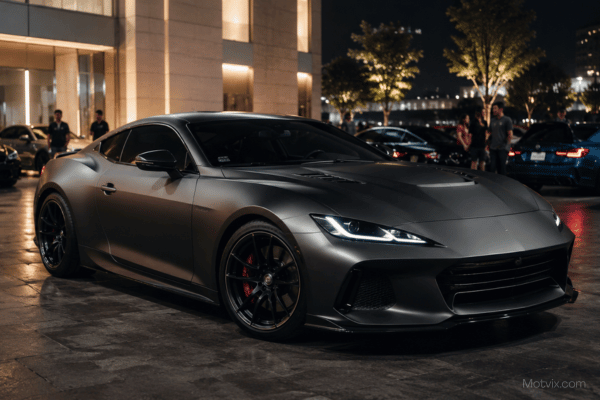
Glossy paint has been the default automotive finish for decades, and for good reason: it photographs well, hides minor imperfections through reflection, and signals a polished, conventional sense of quality. Matte finishes reject that logic entirely. By absorbing rather than reflecting light, they draw attention to the raw geometry of a vehicle’s body — its creases, curves, and proportions — rather than allowing the surface to shimmer and distract.
There is an inherent confidence in choosing matte. The vehicle cannot rely on sparkle to impress; it must stand on form alone. In that sense, matte finishes are a kind of visual honesty, an aesthetic choice that strips away conventional signals of luxury and replaces them with something more austere and, arguably, more deliberate.
A Reflection of Broader Cultural Shifts
The popularity of matte finishes does not exist in isolation. It mirrors broader cultural movements that have been reshaping consumer preferences across industries for years:
- The rejection of overt opulence. In fashion, architecture, and industrial design, there has been a sustained movement toward understated, intentional aesthetics. Matte vehicles fit naturally into that sensibility.
- The rise of personalization. Modern consumers increasingly want products that feel distinct and personally meaningful. A matte finish immediately sets a vehicle apart from its glossy peers in a parking lot, without requiring aftermarket modifications.
- An appetite for the tactile and raw. As digital experiences dominate daily life, there is a growing appreciation for things that feel physical and unpolished. Matte surfaces reward close inspection in a way that gloss does not.
Electric Vehicles and the Matte Aesthetic
It is no coincidence that many electric vehicles — particularly those positioned as forward-thinking or design-led — have embraced matte finishes or matte-adjacent wraps. For brands working to signal a clean break from automotive convention, a finish that visually departs from the glossy norm is a natural choice. The matte surface becomes part of a broader visual language: restrained, modern, and unencumbered by tradition.
This alignment between matte aesthetics and electric mobility also suggests that the finish is functioning as more than decoration. It is becoming a signifier of identity — a way for vehicle designers and their customers to communicate values without words.
The Practical Trade-Offs
It would be incomplete to discuss matte finishes without acknowledging their demands. They are more sensitive to improper cleaning, more vulnerable to certain types of surface damage, and generally harder to touch up than conventional gloss paint. Automakers offering factory matte options typically pair them with specific care guidelines and, in some cases, protective clear coats engineered to maintain the flat appearance while offering some added resistance.
For buyers, the choice to go matte is thus also a statement of commitment — a willingness to accept additional responsibility in exchange for a distinctive look. That calculus itself reflects something about the type of driver drawn to matte: someone who sees their vehicle as an extension of considered personal expression rather than simply a means of transportation.
A Signal Worth Taking Seriously
Trends in automotive finishes may seem superficial at first glance, but they reliably track deeper shifts in culture, values, and identity. The rise of matte is not merely a passing fashion cycle. It reflects a generation of drivers redefining what sophistication looks like, and an industry increasingly willing to follow that lead — and even get ahead of it. As automakers continue expanding their palette of flat and satin options, the matte finish seems less like a trend and more like a permanent new layer in the visual vocabulary of modern cars.