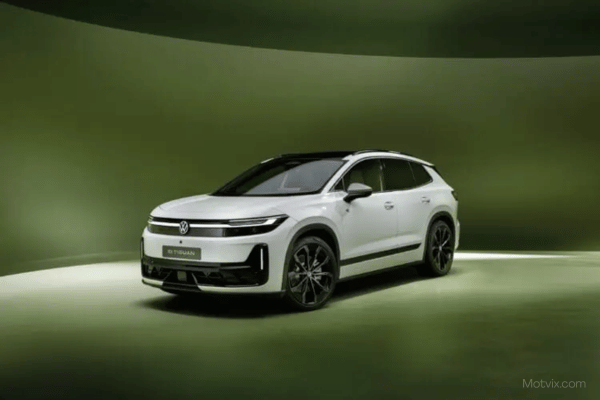
Volkswagen has given its most important electric vehicle a new name and a comprehensive overhaul. The ID. Tiguan — revealed at the Paris Motor Show this week — succeeds the ID.4 in the brand’s electric lineup, bringing an updated design, significantly improved range, better charging, and a cabin upgrade that addresses the most persistent criticism of the outgoing model.
Why It Is No Longer Called the ID.4
The decision to rename the vehicle is commercially and strategically significant. The ID.4 launched in 2021 to generally positive reviews, but it arrived at a time when the broader electric vehicle market was still establishing itself, and it faced headwinds: a complex initial rollout, software issues that generated significant press coverage, and a public perception that the ID lineup as a whole had overpromised and underdelivered on the seamlessness of its technology.
By 2026, the ID.4 carried baggage. Customer satisfaction scores had improved after multiple over-the-air updates and the launch of the improved IQ.Software system, but the brand association persisted. Naming the successor the ID. Tiguan is a strategic reset — borrowing equity from one of Volkswagen’s most beloved combustion nameplate families and applying it to a new generation of electric product that the company is confident can carry that name without undermining it.
The Tiguan has been one of Volkswagen’s best-selling models globally for over a decade. The VW ID Tiguan was revealed as an overhauled ID.4 with 373 miles of range.
The Specification
The ID. Tiguan arrives with 373 miles of WLTP range — a meaningful improvement over the ID.4’s maximum of approximately 340 miles in its best-range configuration. The gain comes from a new, more energy-dense battery architecture and improved thermal management that maintains more of the pack’s usable capacity across a wider range of temperatures.
The charging architecture has also been upgraded. The ID. Tiguan supports higher-power DC fast charging than the ID.4, reducing the time needed for a highway charging stop. Full specifications including charging speeds and motor output figures were confirmed at the Paris show and align with Volkswagen’s next-generation MEB+ platform characteristics.
The exterior design takes a clear step forward from the ID.4’s somewhat subdued styling. The horizontal front light bar — a design element Volkswagen first introduced on the ID.7 — runs across the full width of the vehicle, giving the front end a more assertive and recognizable identity. The overall proportions remain similar to the ID.4 — a compact-to-mid-size SUV footprint — but the detailing and surface quality have been elevated in response to feedback from ID.4 owners who found the design too anonymous.
A Cabin That Finally Feels Premium
The most enthusiastically received aspect of the ID. Tiguan reveal is the interior. The outgoing ID.4’s cabin attracted consistent criticism for its reliance on touch-sensitive controls that were difficult to use without looking — the volume slider, climate buttons, and many frequently used functions were buried in the touchscreen or on capacitive surfaces with no tactile feedback.
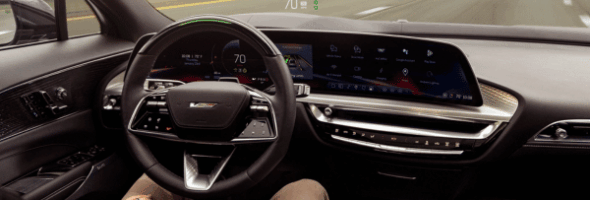
The ID. Tiguan addresses this with a revised control layout that restores physical buttons for climate and volume control, a redesigned central screen with improved graphics and response times, and better material quality across the surfaces that occupants touch most frequently. The steering wheel has been redesigned and the instrument cluster upgraded to the latest generation of Volkswagen’s digital display technology.
The overall interior quality moves the ID. Tiguan perceptibly closer to the ID.7’s premium positioning — which is important for a vehicle that will compete against the BMW iX3, Volvo EX60, and Mercedes-Benz GLC Electric at a slightly lower price point.
Volkswagen’s Most Important EV in the Current Climate
The ID. Tiguan launch comes at a moment of real pressure for Volkswagen’s electric vehicle business. Volkswagen Q3 2026 deliveries dropped 14% on China weakness, and the brand is in the middle of a cost restructuring that has involved difficult decisions about factory capacity and workforce. In the European market — where EV incentives vary by country and Chinese competition is growing — a compelling product at a competitive price is what the business needs most.
The ID. Tiguan is that product. It addresses the known weaknesses of the ID.4 directly, carries a name that connects to one of Volkswagen’s commercial strongholds, and arrives with range and charging improvements that make it competitive with the best in its segment. European deliveries are planned for early 2027, with other markets following through the year.