BMW is in the middle of one of the most significant model strategy reviews in its recent history. CEO Milan Nedeljkovic is leading a broad reassessment of which vehicles BMW will continue to sell, which will be discontinued, and which will be replaced under the brand’s expanding Neue Klasse electric architecture. The result is an uncertain near-term future for some of the brand’s most distinctive — and most polarizing — models: the XM super SUV, the 8 Series grand tourer, and the i4 electric sedan.
The Context: Neue Klasse Changes Everything
To understand why BMW is reviewing its lineup, it helps to understand what the Neue Klasse means for the brand. According to Automotive News, BMW CEO Milan Nedeljkovic is “reviewing BMW’s model strategy amid the automaker’s broad cost cuts,” including the cutting of a few thousand jobs, and as a result, “niche models, derivatives, and powertrain variants” are being affected.
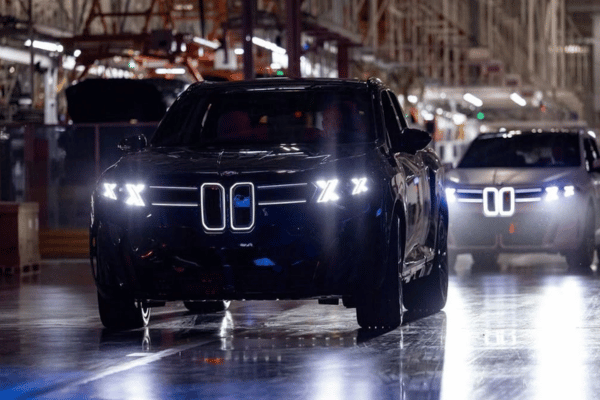
BMW has committed to rolling out its Neue Klasse electric vehicle platform across 40 models by 2027. That architecture — which underpins the newly launched iX3 SUV and the i3 sedan now entering production in Munich — is fundamentally incompatible with the platforms used by many current BMW models. Rather than invest in facelifting or adapting existing vehicles to the new era, BMW is making deliberate choices about which nameplates are worth carrying forward and which are not.
The brand has already confirmed several departures. BMW is set to discontinue the Z4 and 8 Series, with production of both models ending in the coming months. The XM is unlikely to be renewed either. The plug-in hybrid SUV is expected to remain in production until near the end of 2028. Also unlikely to get a next generation are the iX and the 2 Series Active Tourer.
The 8 Series: End of an Era
The BMW 8 Series has had a shorter second life than anyone expected. Revived in 2018 after a two-decade absence, the grand tourer — available as a coupe, convertible, and four-door Gran Coupe — was positioned as BMW’s flagship performance and luxury offering. But it never found the commercial success it needed to justify its development costs alongside the more practical 7 Series.
Current industry reports and factory schedules indicate that production of the G14/G15/G16 generation 8 Series will conclude in mid-to-late 2026. The US market production for standard models like the 840i and M850i wound down by April 2026, making the 2026 model year effectively the final edition.
Word circulated earlier that the 8 Series could have lived on under the Alpina brand for another generation, but this information has been dismissed internally. The future of the 8 Series is uncertain, especially since it would not be feasible to facelift it into the Neue Klasse era. For buyers who want a BMW grand tourer, the path forward will likely run through the 7 Series and its M760e variant.
The XM: BMW’s Most Controversial Model
The XM has divided opinion since its 2022 debut. A standalone M Division SUV with no combustion-only variant — only a plug-in hybrid powertrain — and a design that generated intense reactions from the BMW community, the XM was always a niche product within a brand that prides itself on driver-focused vehicles.
The XM is a standalone model within BMW M’s Division, so it could be directly affected by the cost-cutting review. Following in the footsteps of the X4, the XM is unlikely to be renewed. However, the plug-in hybrid SUV is expected to remain in production until near the end of 2028.
That means existing XM owners and buyers who place an order today can still get the vehicle, but a next-generation XM appears to be off the table. If confirmed, it would end the experiment of a standalone M SUV entirely — at least for now.
The i4: Displaced by Its Successor
Of all the models under review, the i4’s situation is perhaps the most straightforward to explain. The electric four-door launched in 2021 as BMW’s first serious volume EV, and it has sold reasonably well. But its underlying platform predates the Neue Klasse era, and its replacement — the new i3 sedan — is already in production with dramatically superior range, faster charging, and a more modern interior architecture.
Unlike the iX, which will remain on sale in other markets, production of the BMW i4 is reportedly ending either in late 2026 or early 2027. i4 production is going to end so BMW can make way for the new i3, which is a significantly more modern proposal that has entered the Neue Klasse era. The logic is simple: there is no need for two similar products.
For buyers who wanted an i4 and missed the window, the i3’s arrival offers a compelling alternative — one with up to 440 miles of EPA-estimated range and 400 kW fast charging capability, versus the i4’s 301-mile maximum and 205 kW peak charging. The upgrade in capability is significant.
What Survives and What Thrives
Not everything in BMW’s lineup is at risk. The core models — 3 Series, 5 Series, 7 Series, X3, X5, X7 — are either already receiving Neue Klasse successors or are confirmed to continue in updated form. The M2, M3, and M4 performance cars are also expected to carry forward, as is the M5 in its new hybrid form.
The vehicles facing discontinuation share a common profile: they are either low-volume specialists that cannot justify platform investment in the new era, or models that are being superseded by more capable Neue Klasse replacements. The XM, 8 Series, and i4 all fall into one of those two categories.
What This Means for Buyers
For enthusiasts, the departures are genuinely bittersweet. The 8 Series coupe in M850i form was one of the finest grand tourers BMW has built in decades. The M8 Competition, with its twin-turbo V8 and sharp chassis, will be remembered as one of the final expressions of pure combustion M performance at the top of BMW’s range. The XM, whatever one thinks of its design, represented a bold experiment in what an M car could be.
For buyers currently in the market, the message is time-sensitive. Remaining 8 Series inventory is limited and will not be replenished. XM production continues through 2028, giving buyers a longer window. And the i4 should remain available at most dealers through early 2027, even as the i3 begins arriving to replace it. After that, those chapters of BMW’s history close — and the Neue Klasse era takes over fully.