Ford has temporarily paused production of the F-150 at its Dearborn Truck Plant in Michigan, creating another production challenge for one of the automaker’s most important and profitable vehicles.
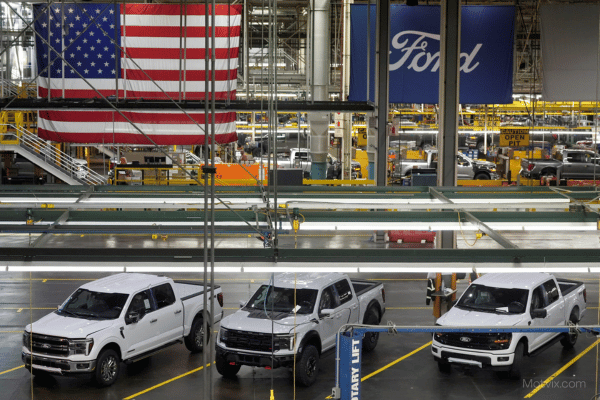
Production crews at the Dearborn facility had their shifts canceled beginning Thursday, September 24, with the interruption scheduled to continue through Tuesday, September 29, according to a company memo reported by Reuters. The disruption is linked to a supplier problem, although the specific component or supplier responsible has not been publicly identified.
The interruption is particularly notable because the Ford F-Series remains a central part of Ford’s business in North America. Even relatively short shutdowns can affect inventory levels, deliveries and the company’s effort to maintain supply at dealerships.
Dearborn Is Not the Only Plant Affected
The problem is not limited to Ford’s Dearborn operations.
Some production shifts at the Kansas City Assembly Plant have also been canceled because of the same supply issue affecting Dearborn. Kansas City is another important location for F-150 production, meaning the disruption has reached more than one manufacturing facility.
Ford has responded by increasing truck production at its Kentucky Truck Plant near Louisville to help compensate for lost output elsewhere.
Importantly, the additional production in Kentucky involves trucks made at that facility and should not be interpreted as additional F-150 production. Reuters issued a correction clarifying this distinction.
For customers, there is no immediate indication that the temporary shutdown will cause widespread vehicle shortages. However, the timing could create additional pressure on Ford if the supplier issue lasts longer than expected.
Another Challenge for F-Series Production
The latest disruption comes after Ford spent much of 2026 dealing with production constraints affecting its pickup business.
Earlier issues included problems connected with aluminum supply following disruptions at supplier Novelis. According to Reuters, the latest problem is unrelated to that previous aluminum shortage.
That distinction is important because it suggests Ford is dealing with a separate supply-chain problem rather than a continuation of the earlier issue.
Ford Authority also reports that F-Series inventory has recently remained below the company’s preferred levels, with approximately 52 days of supply compared with Ford’s target range of roughly 55 to 65 days.
A multi-day production interruption therefore arrives at a time when Ford has been trying to rebuild inventory.
Why the F-150 Matters So Much to Ford
The F-150 is more than another model in Ford’s lineup.
It forms a major part of the broader F-Series family, which includes light-duty and Super Duty pickups. These trucks have historically generated substantial sales volume and revenue for the manufacturer.
The F-Series has also held a remarkably strong position in the United States. Reuters notes that it has been America’s best-selling vehicle line for decades, making interruptions to production especially important for Ford’s financial performance.
Pickup trucks also tend to offer automakers attractive profit margins, particularly when customers select higher trim levels, larger engines and additional equipment.
That means losing several days of production can represent considerably more than simply a reduction in the number of vehicles leaving the factory.
Ford Has Not Detailed the Supplier Problem
One major unanswered question is exactly what caused the latest interruption.
A person familiar with the matter told Reuters that the shutdown is related to a supply problem, but the specific supplier and affected component have not been identified publicly.
Ford has generally avoided commenting on routine day-to-day production changes.
Without further details, it is difficult to determine whether production will resume completely on September 30 or whether additional schedule changes could become necessary.
For now, the company’s schedule indicates that Dearborn crews are expected to remain off through September 29.
Supply Chains Remain Critical for Automakers
The situation is another reminder of how sensitive modern vehicle production can be to disruptions involving individual components.
Manufacturers depend on large networks of suppliers providing everything from aluminum panels and electronics to seats, sensors, wiring and powertrain components.
Modern assembly plants operate with tightly coordinated delivery schedules. As a result, the absence of a relatively small component can sometimes prevent an entire vehicle from being completed.
That vulnerability became especially visible during the global semiconductor shortage earlier in the decade, but automakers continue to face supply risks involving raw materials, electronics and specialized parts.
What Happens Next?
The most important development will be whether Ford can restart normal production at Dearborn after September 29.
If operations resume as planned, the interruption may have only a limited impact on dealer inventories. A longer shutdown, however, could make it more difficult for Ford to rebuild F-Series supply.
The situation at Kansas City will also be closely watched because production there has already been affected by the same supplier issue.
For now, Ford continues to balance production across its manufacturing network while protecting the output of one of the most important vehicle families in the American automotive market.
The F-150 remains a cornerstone of Ford’s lineup, which means even a temporary production pause attracts significant attention — especially when multiple factories are involved.