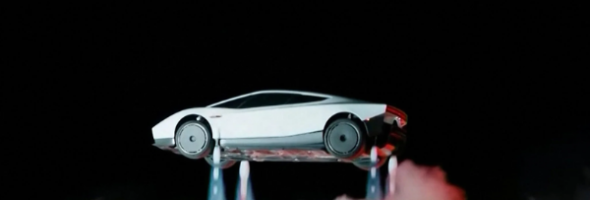
Porsche revealed its next flagship supercar on Thursday evening, and the direction it signals is unmistakable. This is the new Mission S, and it previews not only a new design identity for the brand, but also teases an upcoming super sports car to slot above the 911.
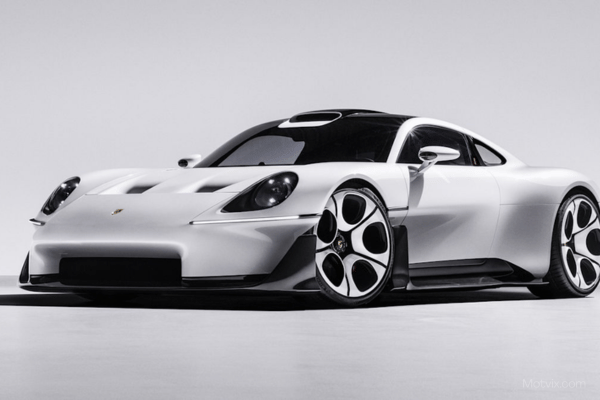
The reveal took place on a pier in Queens, New York — chosen deliberately. Porsche showed the Mission S on 15 October 2026 on a pier in Queens, New York with a view of the Manhattan skyline — the same pier where the mid-engined 550 Spyder was photographed in 1953. The location is a visual argument: this car belongs in the same conversation as the 550 Spyder, the Carrera GT, and the 918 Spyder — the mid-engine greats that mark the outer limit of what Porsche can build.
What the Mission S Is — and What It Is Not
Porsche AG Chairman Michael Leiters said: “The Mission S provides a glimpse of the ideas and design features that will shape Porsche in the coming years. At the same time, the Mission S represents a mid-engined super sports car platform positioned above the 911 — not as a one-off hypercar, but as a permanent and versatile addition to our customer offering.”
That distinction — permanent production model rather than limited hypercar — sets the Mission S apart from its predecessors. The Carrera GT was produced in small numbers and became a collector’s car almost immediately. The 918 Spyder was explicitly limited. The Mission S is meant to be different: a continuously available flagship that does not appreciate into collector territory the moment the production line shuts down.
The Mission S is a mid-engined concept with only vague technical spec. We do know it uses a petrol engine, that it will sit above the 911 in the Porsche line-up and that it won’t be a limited-run hypercar but a production-series supercar. Think less Carrera GT and 918 unobtanium, more Ferrari 296 Speciale.
Design: New Language, Clear Identity
The vehicle’s design is recognizably Porsche but with more aggressive styling compared with its current models, including new hood vents and a roof scoop. The Mission S’s design is quite unlike any other current model, yet still remains identifiable as a Porsche. It’s clearly designed to support a mid-engine layout, giving it a classic supercar profile that combines elements from Porsche models of yesteryear.
The interior makes a specific statement about where Porsche is heading. Porsche has removed the fixed center touchscreen entirely. The concept features five round gauges with an 8,000 rpm tachometer — a deliberate reference to the analog heritage of Porsche’s most celebrated road and race cars. Physical buttons accompany the digital displays that are present, and the overall cockpit philosophy is driver-first rather than technology-first.
Rumors point to a new flat-eight engine, though nothing has been verified. Given that Porsche has never offered a flat-eight in a road car — despite using it in racing — the speculation has a plausible engineering logic: a flat-eight behind the driver in a mid-engine layout would avoid the packaging compromises that historically deterred Porsche from the configuration.
A Course Correction From the Mission X
The Mission S is the course correction. In 2023, Porsche revealed the Mission X — a fully electric hypercar concept that attracted significant attention. The Mission X was positioned as a vision of Porsche’s electric future at its most extreme. By 2026, that direction had been quietly shelved.
The Mission S is the course correction, abandoning the all-electric Mission X in favor of combustion power, signaling a broader strategy shift toward fewer, more exclusive vehicles. That shift is consistent with what Porsche’s CEO confirmed last week: the 911 will never be fully electric. The Mission S extends that philosophy upward — there will be a combustion supercar above the 911, and it will be available to buyers who want it continuously rather than in a numbered edition.
The reveal follows Porsche’s strategy update, which emphasized higher-end products, value over volume, and a breakeven point below 200,000 units. Selling a permanently available, high-priced combustion supercar to performance enthusiasts who are actively resisting electrification is a financially sound strategy for a brand that needs to protect its margins while the broader EV transition plays out.
What Comes Next
The Mission S is a concept. Production timing, pricing, and the final powertrain specification have not been confirmed. Based on the Capital Markets Day presentation and the Mission S reveal’s framing, the production version is several years away — likely arriving in the 2028 to 2030 window on a new platform designed specifically for it.
What Porsche has confirmed at this stage is the vision: a combustion-powered, mid-engine supercar above the 911, available as a permanent model rather than a hypercar experiment. For the segment of the performance car market that Porsche knows best, that is a very compelling promise.