Mercedes-Benz has signed a production agreement with British technology company Wayve to integrate an artificial intelligence-powered driving system into future vehicles.
The partnership, announced on September 22, 2026, will combine Wayve’s AI Driver technology with Mercedes-Benz’s vehicle architecture and MB.OS operating system. The first application is expected to arrive in at least one Mercedes-Benz model within the next two years.
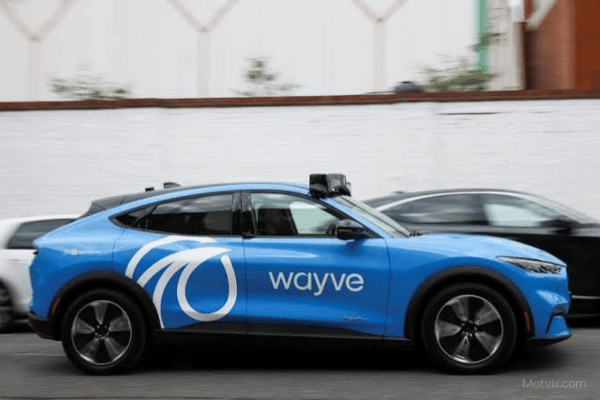
According to the companies, the system will offer advanced point-to-point driving assistance in urban environments. It is intended to help a vehicle understand complicated streets, traffic signals, cyclists, pedestrians and changing road conditions.
However, the first version should not be confused with a fully autonomous vehicle. It will remain a supervised driver-assistance system, meaning that the person behind the wheel must continue monitoring the road and be ready to take control.
The agreement is nevertheless an important step for both companies. Mercedes-Benz gains access to one of the most closely watched artificial intelligence platforms in the automotive sector, while Wayve moves closer to installing its software in commercially available premium vehicles.
What is the Wayve AI Driver?
Wayve was founded in London in 2017 and specializes in what it calls embodied artificial intelligence. Instead of depending mainly on a large collection of manually programmed rules, its system learns how to interpret and respond to real-world driving situations using data.
A traditional automated driving system may be programmed with separate rules for traffic lights, lane markings, pedestrians and different types of intersections. Wayve’s end-to-end approach uses an AI model to process sensor information and generate an appropriate driving response.
The company says its platform can adapt to different vehicles, countries and road environments without needing a completely separate system for every city.
Wayve has tested a single AI Driver model in more than 500 cities across Europe, North America and Japan. Its objective is to create software that can recognize unfamiliar situations instead of operating only inside a small, heavily mapped area.
This adaptability could be especially useful in urban environments, where road construction, unusual intersections, delivery vehicles, cyclists and human behavior frequently create unpredictable scenarios.
Unlike some autonomous vehicle systems, Wayve’s approach is also designed to work without depending exclusively on detailed high-definition maps or highly specialized hardware.
Mercedes-Benz will use its own vehicle architecture
The agreement does not mean that Mercedes-Benz will hand over complete control of its vehicle technology to Wayve.
Wayve’s software will be integrated into Mercedes-Benz’s production architecture, using the manufacturer’s onboard hardware and MB.OS operating system. This allows Mercedes-Benz to maintain control of the vehicle experience, safety systems and interaction between different electronic components.
MB.OS is the company’s proprietary operating system for areas including driving assistance, infotainment, battery management, charging and comfort features.
Using this platform could make it easier for Mercedes-Benz to introduce new functions through over-the-air software updates. It may also allow the manufacturer to offer different levels of driver assistance according to the model, market and local regulations.
Wayve and Mercedes-Benz have already worked together during technical development and testing. The new definitive production agreement moves that relationship closer to a feature that customers may eventually be able to order.
The companies have not yet identified the first vehicle that will receive the system. Pricing, countries and complete hardware requirements also remain unconfirmed.
Urban driving is the main objective
Many current assistance systems perform best on highways, where traffic generally moves in the same direction and lanes are clearly defined. Cities present a more difficult challenge.
A vehicle operating in an urban area must recognize pedestrians crossing unexpectedly, bicycles traveling between lanes, parked vehicles opening doors and intersections that may not follow a standard design.
It may also encounter temporary road signs, construction workers, emergency vehicles and drivers who behave unpredictably.
Mercedes-Benz says the Wayve integration is intended to provide advanced urban point-to-point assistance. This suggests the system will attempt to support the driver during a larger portion of a journey instead of working only on selected highway sections.
The exact operating conditions have not been announced. It is also unclear whether the first version will permit hands-free driving or require the driver to keep contact with the steering wheel.
What is clear is that supervision will remain necessary. The expected system should therefore be viewed as advanced Level 2 assistance rather than an unsupervised Level 4 robotaxi.
Mercedes is following a multi-partner strategy
Mercedes-Benz already has substantial experience with automated driving.
Its Drive Pilot system was among the first internationally approved Level 3 systems for selected roads and conditions. Level 3 technology can allow the driver to stop continuously supervising the road while the system is active, although its use remains limited by location, speed, weather and regulation.
The company is also developing driver-assistance technology with Nvidia for vehicles based on MB.OS. Working with Wayve does not necessarily replace those programs.
Instead, the agreement indicates that Mercedes-Benz is willing to combine internal development with specialized technology from outside companies.
This multi-partner strategy could help the manufacturer introduce features more quickly and select different solutions for different vehicles or markets.
Competition is becoming stronger. Tesla continues developing its camera-based Full Self-Driving system, while Chinese brands such as Xpeng, Li Auto and Nio are rapidly expanding urban navigation assistance.
Traditional manufacturers consequently face pressure to offer software that can improve throughout the life of a vehicle.
Wayve is attracting major automotive partners
Mercedes-Benz is not the only large automaker working with Wayve.
Nissan has announced plans to use Wayve technology in future driver-assistance programs and a robotaxi project with Uber. Stellantis has also entered a partnership to integrate Wayve AI Driver into its STLA AutoDrive platform.
The Stellantis program targets supervised hands-free urban and highway driving, with its first North American vehicle integration planned for 2028.
In February 2026, Wayve completed a $1.2 billion investment round that valued the company at approximately $8.6 billion. Mercedes-Benz, Nissan and Stellantis participated alongside technology companies and institutional investors.
Uber committed additional milestone-based capital for robotaxi deployments, bringing the wider funding package announced by Wayve to as much as $1.5 billion.
The investment gives Wayve resources to transform its research platform into software capable of meeting the reliability, safety and manufacturing requirements of mass-produced vehicles.
What the partnership means for drivers
For consumers, the most relevant potential benefit is assistance during the most stressful parts of everyday driving.
A system capable of navigating complicated urban routes could reduce the workload associated with congestion, lane selection and busy intersections. It could also support safety by continuously monitoring the vehicle’s surroundings.
However, artificial intelligence does not eliminate responsibility. Drivers must understand the limitations of any assistance system and avoid treating supervised technology as fully autonomous.
Weather, damaged road markings, dirty sensors and unusual traffic situations can still affect performance. Clear communication inside the vehicle will be essential so that drivers always know when the system is operating and when they need to intervene.