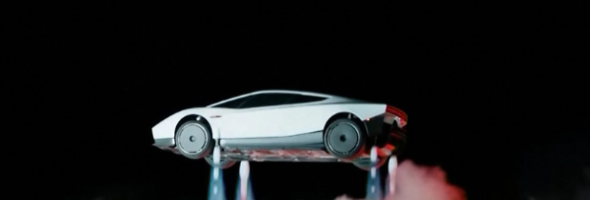
Tesla is reportedly preparing to introduce its purpose-built Cybercab in Austin, Texas, as soon as August 2026, potentially marking the first real-world deployment of the company’s autonomous vehicle without traditional driving controls.
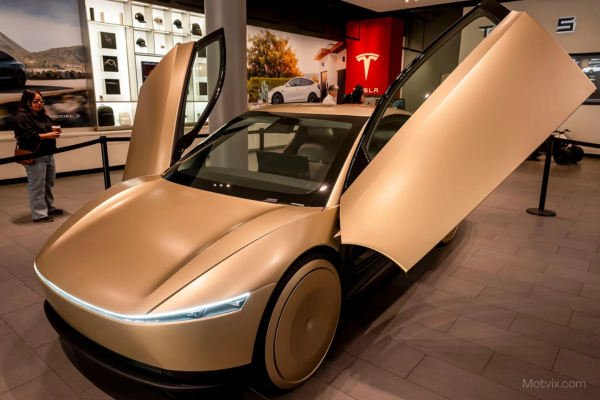
According to a report by The Information cited by Reuters, Tesla has told employees that the initial rollout could begin with rides for company staff on public roads. The vehicles could then be incorporated into Tesla’s existing Austin robotaxi service several days later.
Tesla had not publicly confirmed the exact launch date, fleet size or complete operating plan at the time of the report. Therefore, the proposed August timetable may still change.
Employee Rides Could Come First
Tesla is expected to use a gradual introduction rather than immediately opening the Cybercab to every customer.
The reported first phase would allow employees to ride in the vehicles on public roads. This could help the company monitor the Cybercab’s behavior in real traffic while gathering information about passenger experience, pickup locations and unexpected situations.
After that initial phase, the vehicles could begin carrying users through Tesla’s robotaxi platform in Austin.
Recent preparations have reportedly included private-road employee rides, additional vehicle testing and training exercises with local first responders. Production-specification Cybercab prototypes have also been undergoing public-road testing since June.
These steps suggest that Tesla is treating the rollout as an operational test as well as a product launch.
A Vehicle Designed Without a Driver
The Cybercab differs from conventional Tesla models because it was developed specifically for autonomous transportation.
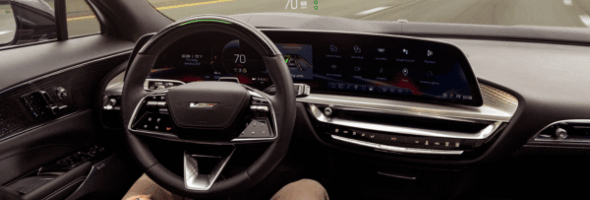
It does not have a steering wheel or pedals. Therefore, it cannot be operated like a traditional passenger vehicle if the automated system encounters a problem.
This design is central to Tesla’s long-term strategy. Instead of converting a regular vehicle into a robotaxi, the company wants the Cybercab to function as a dedicated mobility platform in which every part of the interior is designed around passengers.
Removing the steering wheel and pedals could provide more usable cabin space and simplify the interior. However, it also makes the vehicle completely dependent on its cameras, computers, software and remote support systems.
The Austin deployment will consequently be important for demonstrating whether this approach can work consistently outside controlled demonstrations.
Tesla’s Next-Generation Platform
Tesla has previously said that the Cybercab will use its next-generation vehicle platform and a highly efficient electric powertrain.
According to company information released after the vehicle’s original presentation, Tesla estimated energy efficiency of approximately 5.5 miles per kilowatt-hour. Actual efficiency will depend on driving conditions, passenger loads, weather and production specifications.
The manufacturer has also said that volume production of the Cybercab is planned to begin in 2026. However, starting a limited robotaxi deployment is different from achieving large-scale manufacturing.
A small Austin fleet would allow Tesla to refine the service while its production process continues to expand. The company has not disclosed how many Cybercabs it expects to manufacture during the first phase.
Why Austin Is an Important Testing Ground
Austin has become a central location for Tesla’s autonomous mobility plans. The company can use the city to evaluate vehicle behavior across busy streets, residential areas, intersections and changing traffic conditions.
Introducing the Cybercab into an operating ride-hailing service would provide considerably more data than traditional development testing.
Each trip could help Tesla study routing, passenger pickup behavior, cleaning requirements, charging schedules and fleet utilization. It could also reveal how passengers respond to traveling in a vehicle that has no visible driver controls.
Training with first responders is another important part of the preparation. Emergency personnel need to know how to approach, stop or access an autonomous vehicle if it becomes disabled or is involved in an incident.
However, the reported preparation does not guarantee that the service will immediately expand beyond its initial operating area.
Public Launch Does Not Mean Wide Availability
The phrase “public launch” could create the impression that Cybercabs will soon operate throughout the United States. In practice, the first deployment is expected to remain geographically limited.
The Reuters report does not specify when the vehicle could reach other cities. It also does not provide details about ride pricing, operating hours or the number of vehicles involved.
Tesla may initially restrict routes, weather conditions or pickup zones while it studies performance. A staged approach would allow the company to increase service gradually instead of placing a large number of vehicles on the road at once.
The Cybercab is also intended primarily for autonomous ride-hailing rather than conventional private ownership. For most consumers, the first opportunity to experience the vehicle may therefore come through booking a trip, not purchasing one.
A Major Test for Tesla’s Autonomous Strategy
Tesla has spent years presenting autonomous driving as a key part of its future. The Cybercab is the clearest physical expression of that strategy because the vehicle was designed with no expectation of a human driver taking control.
If the reported Austin rollout begins this month, Tesla will move from demonstrating prototypes to testing a purpose-built autonomous vehicle with real passengers.
That transition will bring new questions about reliability, customer confidence, emergency procedures and the speed at which the company can manufacture additional units.
The first Cybercab rides are unlikely to transform urban transportation overnight. Nevertheless, they could represent a significant milestone for Tesla.
Success in Austin would give the company a foundation for expanding the service. Delays or operational difficulties, meanwhile, would show how challenging it remains to deploy autonomous vehicles at scale.
For now, Tesla’s August Cybercab launch remains a reported plan rather than a fully confirmed timetable. The next few weeks could determine whether the vehicle finally begins carrying passengers or remains in the testing stage for longer.