Volvo Cars is preparing the largest product expansion in its 99-year history at the same time that it begins a major leadership transition.
The Swedish manufacturer plans to introduce 13 all-new vehicles by the end of 2030. Seven will be developed primarily for Western markets, while six will be created for China. The future portfolio will include fully electric vehicles and a new generation of hybrids, rather than relying on a single powertrain strategy for every customer and region.
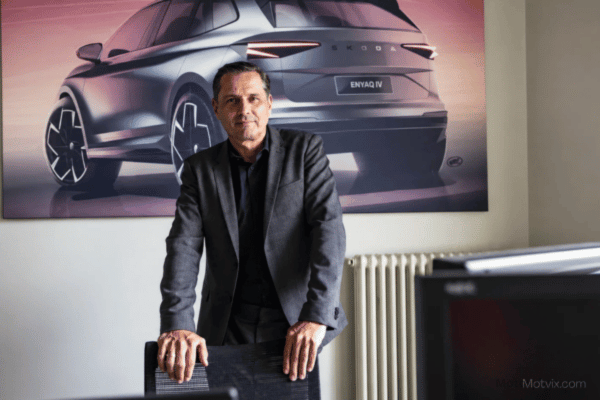
Volvo has also appointed Klaus Zellmer as its next president and chief executive officer. Zellmer, currently the head of Škoda Auto, is expected to assume the Volvo position no later than October 1, 2027.
Current CEO Håkan Samuelsson will remain involved during the transition. That timing gives the company an opportunity to begin implementing its new strategy before leadership formally passes to Zellmer.
Thirteen new vehicles for different markets
The division of the product plan between seven Western-market vehicles and six China-specific models represents a significant change in how Volvo develops cars.
For many years, international manufacturers attempted to create global vehicles that could be sold with relatively minor changes in numerous countries. That strategy can reduce development expenses, but it becomes less effective when customers, regulations and technologies begin moving in different directions.
Electric vehicle demand is growing at different rates around the world. Charging networks, government incentives, tariffs and consumer expectations also vary considerably.
Volvo consequently believes that a more regional approach can help it respond faster. Its Western portfolio will focus on Europe and the United States, while the China-specific range will be developed with the support of parent company Geely.
The 13 vehicles will also move Volvo into additional market segments. The manufacturer has not identified every model, meaning it remains too early to confirm their names, body styles, prices or individual launch dates.
The announcement nevertheless suggests that Volvo’s showrooms could become substantially more diverse before the end of the decade.
Electric cars remain important, but hybrids gain a larger role
Volvo continues to view fully electric vehicles as a central part of its future. However, the company now acknowledges that many customers are not prepared to switch immediately from combustion-powered vehicles to battery-electric cars.
Its answer is what the manufacturer calls flexible electrification. The upcoming range will include all-electric cars alongside third-generation hybrids designed for markets and customers that require another step between conventional engines and complete electrification.
This is a pragmatic adjustment rather than an abandonment of electric vehicles. In 2025, electrified models accounted for approximately 46 percent of Volvo’s global sales, demonstrating that battery-electric and plug-in hybrid cars are already a substantial part of its business.
New hybrids could help the company reach buyers who cannot charge regularly, travel long distances or live in regions where public infrastructure remains limited.
The challenge will be creating hybrid systems that deliver meaningful electric capability and efficiency rather than simply using electrification as a marketing label. Pricing will also matter because complicated dual-powertrain vehicles can be expensive to manufacture.
SPA platforms and HuginCore technology
New Volvo vehicles developed for Western markets will use the company’s SPA2 and SPA3 architectures, together with its HuginCore computing platform.
SPA3 is particularly important because it was developed to support a broader variety of electric vehicles. Reusing a flexible architecture across several models can reduce development time and allow Volvo to share batteries, motors, electronic systems and manufacturing processes.
HuginCore provides the computing foundation for Volvo’s software-defined vehicles. It is intended to support infotainment, safety technology, connectivity and driver-assistance functions while allowing capabilities to improve through over-the-air updates.
This architecture-based strategy should reduce the amount of new investment required for each vehicle. Instead of developing an independent technological foundation every time it enters another segment, Volvo can adapt systems that have already been engineered and tested.
Customers may benefit through faster model development, more regular software improvements and greater consistency across the range. Volvo must still demonstrate that its software can remain stable and easy to use, particularly as vehicles become more dependent on centralized computing.
Deeper cooperation with Geely
The six China-specific models will be developed through closer cooperation with Geely.
Volvo says the companies will share platforms, components, supply chains and a dedicated technology stack for China. This arrangement is designed to help Volvo compete in a market where local manufacturers introduce new vehicles and software features at an exceptionally rapid pace.
By 2030, Volvo wants approximately 30 percent of its components to be fully common across relevant vehicles, compared with around 10 percent today. It estimates that this increased commonality could generate material cost savings of approximately five percent, in addition to indirect efficiencies.
Sharing parts does not necessarily mean that future Volvos will become identical to models from other Geely brands. Platform sharing is common throughout the automotive industry, and manufacturers can still differentiate vehicles through design, suspension tuning, materials, safety engineering and software.
The risk is that excessive commonality can weaken brand identity. Volvo will therefore need to ensure that customers continue to recognize its characteristic approach to safety, Scandinavian design and comfort.
A new way of selling and supporting cars
The strategy extends beyond product development.
Volvo wants to simplify the purchasing process through clearer pricing, more streamlined equipment packages and special configurations that can be delivered quickly. It also plans to expand complete ownership offers, including its Care services and regular over-the-air software updates.
Fast-delivery versions could help solve a common problem created by highly complicated vehicle configurators. When every customer chooses a different combination of options, production and logistics become more difficult.
A smaller number of carefully selected specifications can reduce waiting times and make inventory easier for dealers to manage. Transparent pricing could also improve the customer experience if it is applied consistently.
Volvo ultimately wants to build a continuing relationship with owners instead of limiting its business to the initial vehicle sale. Software, maintenance programs and connected services will play an increasingly important role in that approach.
Klaus Zellmer will inherit a major transformation
Klaus Zellmer will join Volvo with more than three decades of automotive experience.
Before leading Škoda, he served on the management board of Volkswagen Passenger Cars and spent more than 20 years at Porsche. His previous roles included responsibility for Porsche’s operations in Germany and North America.
Volvo’s board highlighted his experience with both premium and high-volume brands. That combination could be valuable because Volvo wants to preserve its upmarket positioning while expanding sales, lowering costs and reaching more customers.
At Škoda, Zellmer oversaw a period of strong results and growing electric vehicle deliveries. He will now face a more complicated challenge at Volvo: managing a premium brand through electrification, software development, regionalization and increasingly intense competition from Chinese manufacturers.
Samuelsson, who returned as CEO in 2025, will help manage the transition and continue developing the company’s strategic roadmap.
Ambitious financial goals
Volvo says the product offensive forms part of its plan to achieve long-term growth and an operating margin above eight percent.
The target is ambitious. Developing 13 vehicles requires considerable investment even when platforms and parts are shared. Market conditions, tariffs, currency changes and price competition could also affect profitability.
Volvo expects lower investment per vehicle because much of the underlying technology has already been developed. Greater component commonality and cooperation with Geely should provide further savings.
The company is effectively attempting to expand its addressable market while reducing the cost of creating each new product.
What customers should expect
Volvo has not yet released a complete schedule for the 13 vehicles, so speculation about individual models should be treated cautiously.
What is clear is that the future portfolio will not consist exclusively of electric SUVs. Volvo says it will enter new segments, use different electrified powertrains and develop separate offerings for its largest regions.
The company’s next phase will be defined by balance: global scale with regional products, premium positioning with shared components, electric vehicles with advanced hybrids and established safety values with rapidly changing software.
If Volvo executes the plan successfully, its showrooms in 2030 could look dramatically different from those of today. Klaus Zellmer’s central task will be ensuring that the expansion strengthens the Volvo identity instead of diluting it.