XPENG is preparing to take its next-generation flagship SUV far beyond China. The company has confirmed that the new XPENG G9L will eventually be introduced in 64 countries and regions, supported by European production and a global development program designed to satisfy several major safety standards.
The G9L will make its international debut on October 12 at the Paris Motor Show. Although market-specific prices, final powertrain specifications and delivery dates have not yet been announced, the information released by XPENG already positions the vehicle as one of the company’s most important global products.
Available in both battery-electric and range-extended electric configurations, the G9L is intended to attract customers who want a technologically advanced luxury SUV but have different charging requirements. It also provides a clearer picture of how XPENG plans to compete against established premium manufacturers in Europe and other international markets.
A large flagship designed for global customers
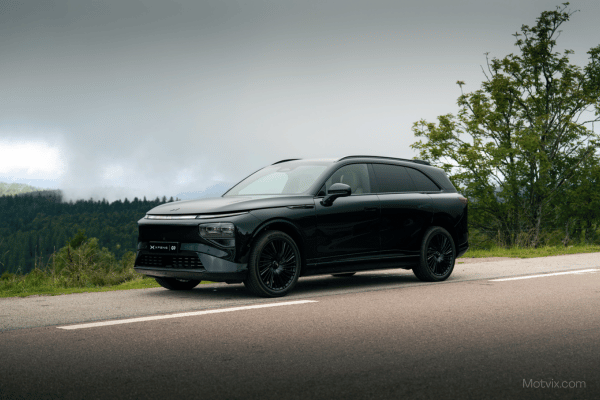
At 5,120 millimeters long and with a 3,100-millimeter wheelbase, the XPENG G9L sits firmly in the large premium SUV category. Its generous wheelbase should provide substantial passenger space, especially for occupants in the second row, while giving the vehicle the proportions expected of a flagship model.
The company describes the relationship between the wheelbase and overall length as an important part of the G9L’s packaging. A long wheelbase can create more usable cabin space without forcing every additional millimeter into the front or rear overhangs.
However, dimensions alone will not determine the G9L’s success. Large electric SUVs must also manage weight, energy consumption, ride comfort and maneuverability. Buyers will therefore have to wait for independent tests to understand how efficiently XPENG has balanced those priorities.
The interior and final equipment specifications for each market are also expected to vary. Features offered on the Chinese version may not necessarily be standard in Europe, Latin America or other regions.
Battery-electric and range-extended versions
One of the most significant aspects of the G9L is the decision to offer two different electrified powertrains.
The battery-electric version will operate exclusively on electricity stored in its traction battery. It is likely to appeal most strongly to customers who can charge at home or have reliable access to public fast-charging infrastructure.
The range-extended electric version, commonly known as an REEV, also uses electric motors to drive the vehicle. However, it includes a combustion engine that can generate electricity when the battery’s available charge falls.
That approach allows drivers to complete longer journeys without depending entirely on charging stations. It may be particularly attractive in markets where charging networks are developing quickly but remain inconsistent outside major cities.
Offering both systems under the same model line gives XPENG more flexibility. European markets with mature charging networks may favor the fully electric version, while customers in geographically larger regions could find the range-extender more practical.
XPENG has not yet confirmed which versions will be offered in every country. Battery capacity, electric range, charging speed, engine specifications and certified consumption figures should therefore be treated as pending until the company publishes homologated regional data.
Artificial intelligence becomes a central feature
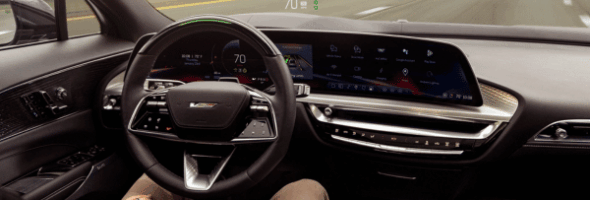
XPENG is presenting the G9L as more than another electric SUV. The company calls it an artificial-intelligence flagship and says the vehicle will use its VLA 2.0 system and proprietary Turing AI chip.
VLA refers to the vision-language-action approach used by XPENG’s driver-assistance technology. In simple terms, the system is designed to process visual information, interpret complex road environments and determine an appropriate vehicle response.
XPENG says the technology is intended to adapt more rapidly to different roads, traffic patterns and regions. That ability will be essential if the company wants to deploy advanced driving assistance in dozens of international markets.
Road markings, traffic signs, driving behavior and regulatory requirements differ significantly between countries. A system that performs well in one Chinese city cannot automatically be assumed to work identically in Paris, Mexico City, Sydney or Kuala Lumpur.
The Turing processor also demonstrates how XPENG is connecting its vehicle and robotics programs. A version of the same chip architecture is used by the company’s IRON humanoid robot project.
This does not mean the G9L can drive autonomously under every condition. Buyers should carefully distinguish between driver-assistance functions and fully autonomous operation. Availability will depend on local regulations, software approval and the equipment installed in each vehicle.
Even advanced systems require an attentive driver unless the manufacturer and relevant authorities explicitly state otherwise.
Extensive international testing
XPENG says the G9L was developed to address the requirements of four major safety assessment programs: Euro NCAP, ANCAP, C-NCAP and CIASI.
According to the manufacturer, the development program included 192 crash tests covering more than 110 individual test items. XPENG also reports that prototypes accumulated more than 6.74 million kilometers of testing across 26 countries and regions over three years.
Those figures indicate a serious effort to prepare the vehicle for different climates, roads and regulatory environments. Testing in several countries can help engineers identify problems involving thermal management, suspension tuning, charging compatibility, corrosion protection and software behavior.
The company’s reference to five-star standards should not be confused with an independent rating already awarded to every version. Final safety scores will only be known after the relevant organizations test the production vehicles sold in their respective markets.
Equipment can also affect safety results. A system included as standard in one country could be optional or unavailable in another, making it important to review the specification of the local vehicle.
Production in China and Austria
The G9L will be manufactured in Guangzhou, China, and at Magna Steyr’s facility in Graz, Austria.
European production is an important part of XPENG’s international expansion. The G9L will become the fourth XPENG model scheduled for production at the Austrian plant, following the G6, G9 and P7+.
Magna has considerable experience building vehicles for several established international brands. Using an existing European manufacturing operation allows XPENG to expand local production without first constructing an entirely new factory.
Local assembly could also shorten supply chains, make deliveries more predictable and help the company respond to changing trade rules. The final effect on pricing will depend on production volume, component sourcing, logistics and each market’s tax structure.
XPENG says the Chinese and Austrian plants will follow the company’s global standards. Nevertheless, customers will expect consistent build quality regardless of where an individual vehicle is assembled.
Why the G9L matters for XPENG
XPENG already sells vehicles in multiple international markets, but the G9L represents a larger and more ambitious test of its global strategy.
Premium SUVs operate in a highly competitive area of the market. The G9L will face electric models from European, American, Korean and Chinese manufacturers, many of which already have recognizable brands and established dealer networks.
Technology alone will not guarantee success. XPENG must also provide reliable service, replacement parts, software support, competitive financing and strong resale values. These areas can influence a purchasing decision as much as range or acceleration.
The company’s plan to launch the SUV in 64 markets suggests that it wants the G9L to become a global product rather than a China-focused model exported in limited numbers. Its combination of two electrified powertrains could help it adapt to regions moving toward electrification at different speeds.
The next important announcement
The Paris Motor Show presentation on October 12 should provide more information about the G9L’s European specifications, pricing, certified range, charging performance and market launch schedule.
Until those details are published, the strongest confirmed points are its large dimensions, availability as both a battery-electric and range-extended vehicle, advanced AI platform, extensive testing program and planned production in China and Austria.
If XPENG delivers competitive pricing and dependable regional support, the G9L could become one of the company’s most relevant vehicles outside China. It also demonstrates how rapidly Chinese automakers are moving from exporting individual models to developing, testing and manufacturing vehicles specifically for a global audience.