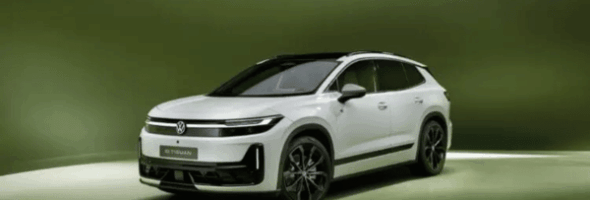
Volkswagen has officially opened pre-sales for the new ID. Polo GTI, marking a major turning point in the history of one of the German manufacturer’s most recognizable performance badges. For the first time, the GTI name is being applied to a fully electric production vehicle, combining familiar performance-focused characteristics with a battery-electric powertrain.
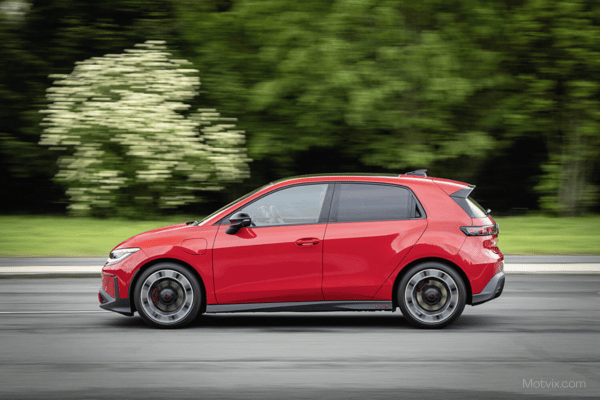
Announced on October 7, 2026, the ID. Polo GTI develops 166 kW, equivalent to 226 PS, and produces 290 Nm of torque. Volkswagen has positioned the compact electric model as a modern interpretation of the original GTI formula, maintaining front-wheel drive and relatively compact dimensions while introducing a completely new propulsion system.
The first fully electric GTI
The arrival of the ID. Polo GTI represents one of the most significant changes in the GTI story since the original Golf GTI appeared in 1976. Volkswagen has spent five decades associating the badge with accessible performance, compact dimensions and everyday usability, characteristics the company says remain central to the new electric model.
Rather than simply adding more power to a conventional ID. Polo, Volkswagen developed a dedicated chassis setup for the GTI. The car includes an electronically controlled front-axle differential lock, progressive steering and adaptive DCC sports suspension, technologies intended to improve traction and maintain predictable handling under more demanding driving conditions.
Performance is respectable for a compact electric hot hatch. Volkswagen says the ID. Polo GTI accelerates from zero to 100 km/h in 6.8 seconds, while maximum speed has been electronically limited to 190 km/h. Power is delivered exclusively to the front wheels, preserving one of the traditional characteristics of Volkswagen’s compact GTI models.
New GTI driving mode adds more character
Volkswagen has also introduced a dedicated GTI driving profile that changes several vehicle settings at the push of a button. The system modifies powertrain response, steering characteristics and suspension behavior, allowing drivers to switch from normal everyday operation to a more performance-focused setup.
The mode also changes the digital presentation inside the cabin and activates a specially developed GTI sound. Although electric vehicles do not produce the mechanical soundtrack of a combustion engine, Volkswagen is attempting to create a recognizable performance experience through software, visual graphics and synthesized audio.
This approach reflects a broader challenge facing manufacturers as established performance badges move into the electric era. Brands are increasingly using software, chassis tuning and digital interfaces to preserve emotional characteristics that were traditionally associated with engines, gearboxes and exhaust systems.
431 kilometers of WLTP range
The ID. Polo GTI uses a battery with a net capacity of 52 kWh. According to Volkswagen, the vehicle can travel up to 431 kilometers under the WLTP test cycle, giving the performance-oriented model sufficient range for daily driving as well as longer journeys.
DC fast charging is supported at up to 105 kW. Volkswagen estimates that the battery can recharge from 10 to 80 percent in approximately 24 minutes under suitable conditions, although real-world charging times will depend on battery temperature, charger output and environmental factors.
The navigation system includes an electric route planner that can automatically include charging stops when necessary. This type of functionality has become increasingly important as manufacturers attempt to make longer-distance EV travel simpler and reduce the amount of planning required from drivers.
Familiar GTI design cues remain
Despite its new electric architecture, Volkswagen has made an effort to ensure the ID. Polo GTI remains immediately recognizable as part of the GTI family. The exterior includes a red front accent, honeycomb-inspired details, 19-inch alloy wheels and distinctive GTI badging across the body.
Other exterior elements include IQ.LIGHT LED matrix headlights, illuminated Volkswagen logos and a split roof-edge spoiler. The combination provides a more aggressive appearance than the standard ID. Polo without radically changing the proportions of the compact electric hatchback.
Inside, Volkswagen continues the same approach. Red contrast stitching, performance seats and a red center marker on the steering wheel provide traditional GTI references, while the seat upholstery incorporates a modern interpretation of the check pattern associated with earlier generations of the performance model.
A digital cabin with a retro option
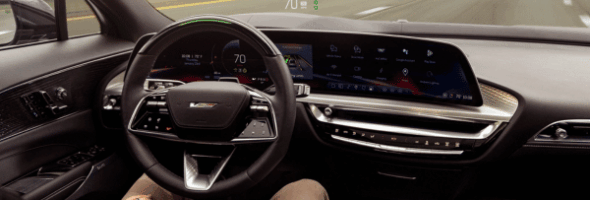
The interior technology combines a 10.25-inch Digital Cockpit with a larger 12.9-inch central infotainment screen. Both displays sit along the same visual axis, giving the dashboard a cleaner and more contemporary appearance than previous combustion-powered Polo models.
Volkswagen has also introduced an optional retro display inspired by the instruments of the first-generation Golf GTI. The digital interface can reproduce graphics based on older analog gauges, while the multimedia system can even represent music tracks using a cassette-inspired graphic.
The detail demonstrates how Volkswagen is attempting to connect the company’s performance heritage with modern digital technology. Rather than completely abandoning the past, the manufacturer is integrating historical references into an interface designed for a new generation of electric vehicles.
More practical than the gasoline Polo GTI
Electric packaging also provides practical advantages. Because the electric drivetrain occupies less space than a conventional combustion engine and transmission, Volkswagen says the ID. Polo GTI offers more passenger room than the gasoline-powered Polo GTI.
Cargo capacity increases from 351 liters in the combustion model to 441 liters in the electric version. Folding the rear seats expands available capacity to as much as 1,240 liters, making the new performance model useful for everyday transportation rather than limiting its appeal to enthusiastic driving.
An optional detachable tow bar is also available, primarily intended for accessories such as bicycle carriers. Its 75-kilogram nose-weight capacity allows the vehicle to support a carrier designed for two electric bicycles.
Starting price below €40,000
Volkswagen has priced the ID. Polo GTI from €39,995 in its initial market configuration. That gives the company an opportunity to position the model as a relatively accessible performance EV compared with more expensive electric sports cars and high-output premium models.
Optional equipment includes a panoramic glass roof, electrically adjustable 12-way front seats with massage functionality and a 425-watt Harman Kardon sound system. Volkswagen will also offer upgraded 19-inch performance tires for customers who prioritize sharper handling.
The ID. Polo GTI arrives at a time when manufacturers are searching for ways to make electric vehicles more emotionally appealing. Efficiency and range remain important, but performance brands increasingly recognize that customers also expect distinctive design, engaging handling and a clear identity.
GTI enters a new era
The transition to electric power does not guarantee that traditional GTI enthusiasts will immediately embrace the new formula. For Volkswagen, however, the ID. Polo GTI provides an opportunity to prove that the characteristics associated with the badge can survive without a gasoline engine.
With 226 PS, front-wheel drive, an electronically controlled differential, adaptive suspension and more than 400 kilometers of claimed WLTP range, the ID. Polo GTI combines performance with everyday practicality.
More importantly, it establishes the blueprint for future electric GTI models. After five decades defined primarily by combustion engines, one of Volkswagen’s most recognizable performance identities has officially entered the electric era.