Volkswagen is making a major change to its electric vehicle strategy. The German automaker has officially confirmed the new Volkswagen ID. Tiguan, an all-electric SUV that will eventually succeed the ID.4 and ID.5.
The announcement was made on September 28, 2026, ahead of the vehicle’s world premiere scheduled for early October.
Rather than creating another completely new name for its electric lineup, Volkswagen is bringing one of its most recognizable SUV names into the EV era.
The new ID. Tiguan is expected to arrive on the market at the beginning of 2027.
Volkswagen Brings the Tiguan Name to Its Electric Lineup
Volkswagen has been gradually changing the naming strategy of its ID electric cars.
The ID. Tiguan follows models such as the ID. Polo and ID. Cross, which combine the company’s established vehicle names with the ID electric sub-brand.
According to Volkswagen, the approach is designed to make its electric lineup easier for customers to understand.
The Tiguan name is particularly important.
Volkswagen says more than 8.3 million Tiguan vehicles have been produced since the model was introduced. The SUV has become one of the company’s most recognizable products worldwide.
In fact, Volkswagen currently describes the Tiguan as the best-selling model for both the Volkswagen brand and the wider Volkswagen Group.
That gives the ID. Tiguan a major responsibility as the company continues its transition toward electric mobility.
The ID. Tiguan Will Replace the ID.4 and ID.5
One of the biggest announcements is that the ID. Tiguan will become the successor to Volkswagen’s existing ID.4 and ID.5 electric SUVs.
The ID.4 has played a major role in Volkswagen’s global EV expansion since its introduction.
Together, the ID.4 and its coupe-style ID.5 sibling have recorded more than 950,000 deliveries since 2021, according to Volkswagen.
Instead of continuing those names into another generation, Volkswagen will shift toward the better-known Tiguan branding.
That does not mean the conventional Tiguan is disappearing.
The gasoline, diesel and plug-in hybrid versions of the Tiguan will continue to be sold alongside the new electric model.
This creates two parallel SUV options: a traditional Tiguan with combustion or hybrid power and an ID. Tiguan powered entirely by electricity.
A Completely New Electric SUV
Volkswagen describes the ID. Tiguan as a new-generation electric SUV rather than simply an electric version of the current gasoline model.
The company says it will feature an entirely new design while maintaining the practical characteristics associated with the Tiguan name.
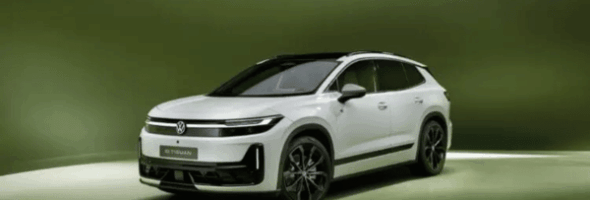
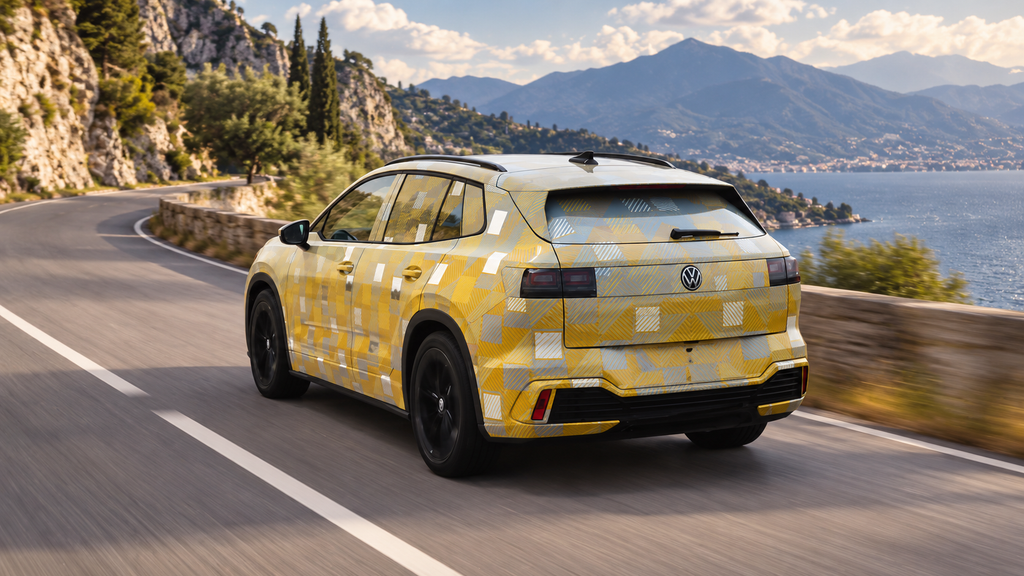
Early official images show the vehicle wearing camouflage, but several styling details can already be seen.
The SUV appears to have a cleaner and more aerodynamic front section than the conventional Tiguan.
Slim lighting elements extend across the front, while the body has a relatively upright SUV profile.
Volkswagen also says the design gives the ID. Tiguan the visual presence of a vehicle from a larger segment.
That suggests the electric model could offer substantial interior space despite remaining within the compact SUV category.
Volkswagen Is Focusing on Familiar Names
The ID. Tiguan represents a broader shift in Volkswagen’s electric strategy.
Earlier EVs such as the ID.3, ID.4, ID.5 and ID.7 relied on numeric names that were separate from Volkswagen’s traditional lineup.
Now, the company is increasingly combining familiar names with its ID designation.
The strategy could help customers immediately understand where each electric vehicle fits within the lineup.
For example, buyers already understand the size and purpose associated with names such as Polo and Tiguan.
Adding “ID.” communicates that the model uses an electric powertrain.
This could simplify Volkswagen’s range as electric vehicles become a larger part of its overall sales.
Tiguan Remains One of Volkswagen’s Most Important Models
The Tiguan has become a critical product for Volkswagen.
The company says deliveries of the Tiguan and its larger Tayron sister model exceeded one million vehicles during the previous year.
That level of demand helps explain why Volkswagen decided to use the Tiguan name for one of its most important upcoming EVs.
Thomas Schäfer, CEO of the Volkswagen brand, said the company wants to transfer the strengths associated with the Tiguan into its electric future.
Volkswagen highlights design, interior space, easy-to-use controls and new technology as some of the key characteristics planned for the ID. Tiguan.
Full Specifications Are Still Under Wraps
Volkswagen has not yet released the complete technical specifications.
Battery capacity, driving range, motor output and charging speed remain unconfirmed.
Those details are expected to become clearer during the official world premiere in early October.
The company is still testing near-production prototypes under camouflage.
This means some exterior and interior elements could still differ slightly from the final production vehicle.
However, Volkswagen has confirmed that the ID. Tiguan is already close to its production form.
Competition Will Be Intense
The electric SUV segment has become one of the most competitive areas of the global automotive market.
The ID. Tiguan will face vehicles from Tesla, Hyundai, Kia, BYD, Geely, BMW, Mercedes-Benz and several other manufacturers.
Volkswagen will therefore need more than a recognizable name.
Driving range, charging performance, software and pricing will likely determine how competitive the model becomes.
Replacing the ID.4 is particularly significant because that vehicle has served as one of Volkswagen’s primary global EVs.
The ID. Tiguan will effectively take over that role.
When Will the Volkswagen ID. Tiguan Arrive?
The official world premiere is scheduled for early October 2026.
Volkswagen says market launches will begin in early 2027.
Specific launch dates will depend on the region.
Pricing has not yet been announced.
More details about battery sizes, range, powertrains and technology are also expected during the official presentation.
For Volkswagen, however, the message is already clear.
The company wants its next generation of electric vehicles to feel less like a separate product family and more like an electric extension of the Volkswagen models customers already recognize.
With the ID. Tiguan replacing the ID.4 and ID.5, one of Volkswagen’s strongest names is officially becoming part of its electric future.