Jaguar has spent two years building anticipation around a car that almost no one has seen without camouflage. On August 12, that changed — at least from the inside. The brand released the first official images of the Type 01’s production interior, giving the world its clearest look yet at what the reimagined Jaguar will feel like to sit inside. And if the exterior divided opinion, the cabin will continue that conversation.
The full reveal of the production Type 01 is confirmed for October 6 in New York. Before that, a camouflaged prototype will make an appearance at the Pebble Beach Concours d’Elegance on August 16 as part of Monterey Car Week.
The Central Spine: An Architectural Statement
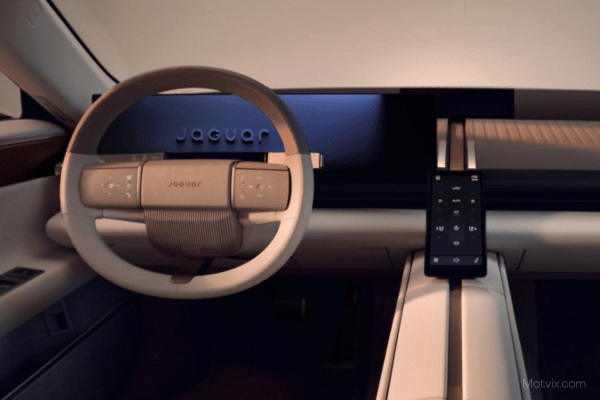
The most defining feature of the Type 01’s cabin is a central spine that runs the full length of the interior — from the front console all the way through to the rear seats. A central spine runs the full length of the cabin, accentuating the longitudinal nature of the design and creating four individual spaces — a concept car vision brought to production.
That single design decision sets the Type 01 apart from virtually every other luxury car on sale today. Where most modern GTs and electric flagships trend toward wide, horizontal dashboards with sweeping screen arrays, the Type 01 makes the opposite choice — emphasizing the car’s length rather than its width, and dividing the cabin into four distinct, individual zones rather than creating a shared interior space.
A structural spine, not a screen, defines the cabin’s logic. It is an architectural approach to car interior design — closer to how a building or a piece of furniture would be organized than how most automakers think about the inside of a car.
Materials and Sensory Identity
The interior’s material language is rooted in natural references that Jaguar has chosen deliberately. Influenced by the enduring beauty of travertine stone and the rich textures of artisan textiles, the Type 01 is a deeply sensorial experience. The brass-inspired finish on the central spine is repeated along the tops of the doors, and these signature art pieces bear the Jaguar leaper running their entire length.
The result is a cabin that communicates warmth through texture — the opposite of the cool, clinical minimalism that dominates many EV interiors. Travertine stone as a design reference suggests muted, natural tones with visible texture and depth. Combined with the brass-inspired metallic accents, the cabin reads more like a tailored hotel suite than a traditional luxury car interior.
The cabin shrinks around the driver with a low seating position that cossets and inspires confidence. That phrasing from Jaguar points to a GT-oriented driving position rather than an upright, SUV-like one — the car is designed to feel like a driver’s machine even while carrying four people in genuine comfort.
Hidden Technology
One of the most notable aspects of the Type 01 cabin is what you cannot immediately see. The four-seater cabin of this electric GT runs on straight lines, concealed compartments, and retro-inspired shapes and colorways, along with hidden-until-needed technology that carries over the same minimalist and divisive design language Jaguar used on the exterior.
This philosophy — hiding the technology until the driver or passenger needs it — is a response to what Jaguar’s design team calls visual noise. Most modern luxury cars present the driver with large, permanently visible screens. The Type 01 treats digital interfaces as tools that appear on demand, leaving the surfaces clean when they are not in use.
Screens stay mostly out of sight on a dashboard Jaguar has kept slim by treating infotainment as something to surface only on demand rather than spread permanently across the cabin — a restraint that sits in direct contrast to nearly everything else at this price point.
Whether buyers find this approach liberating or frustrating will likely depend on how well the hidden-until-needed implementation actually works in daily use. The concept is appealing; the execution will only be fully judged once journalists and customers can spend time with the finished car.
From Concept to Production — Almost Unchanged
When Jaguar first revealed the Type 00 concept at Miami Art Week in December 2024, reactions ranged from genuinely impressed to sharply critical. The bold exterior, the new brand identity, and the decision to go fully electric while targeting Bentley’s price point all generated intense debate.
The interior takes clear inspiration from that of the controversial Type 00 concept, and the firm calls it a concept car vision brought to production. That phrase carries weight. Automakers routinely soften their concepts for production — toning down design details that proved impractical or too extreme for the showroom floor. Jaguar appears to have done very little of that with the Type 01’s interior.
Jaguar has spent the past two years telling the world its future will look radically different. Now, for the first time, we know what that looks like from the driver’s seat.
The October 6 Countdown
The interior reveal lands as Jaguar builds momentum toward the Type 01’s full world debut in New York on October 6. The car will also appear at Pebble Beach on August 16, where it will be shown in prototype form wearing a distinctive new camouflage wrap — one that, in typical Jaguar fashion since 2024, is more of a design statement than a disguise. The camouflage wrap spells out the car’s own name and reveal date, turning the thing meant to conceal it into a kind of signage.
The production Type 01 will be built in the UK on the bespoke Jaguar Electric Architecture platform, designed from the ground up for the brand’s new electric lineup. It targets a starting price of around $150,000 — putting it squarely in competition with Bentley, Aston Martin, and Mercedes-Maybach. Whether the interior’s radical design helps or hurts the case against those established rivals is a question that October will begin to answer.