Porsche has revealed a significant new product and business strategy that could reshape its vehicle lineup over the next decade. Called Sportwagenschmiede ’35, the plan puts renewed emphasis on sports cars, exclusivity and higher-value models while reducing complexity across the manufacturer’s existing portfolio.
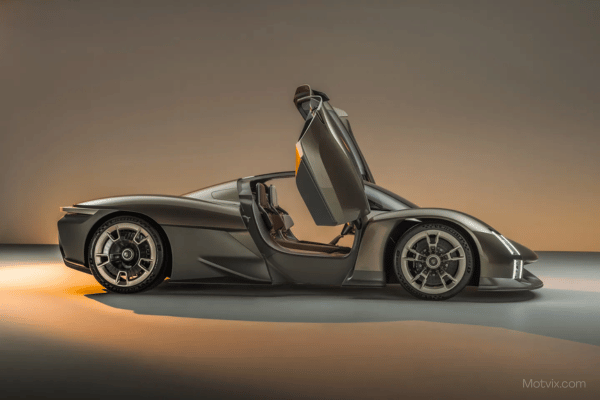
The strategy was officially presented on October 7, 2026, during Porsche’s Capital Markets Day at the Weissach Development Center. Among the most important announcements is confirmation that Porsche is evaluating a new mid-engine super sports car platform capable of supporting a model positioned above the legendary 911.
A future Porsche above the 911
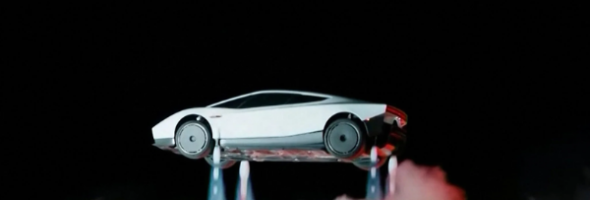
Perhaps the most exciting element of the announcement is Porsche’s plan for a possible new flagship sports car. The manufacturer says it is developing a mid-engine super sports car platform that could support a new model line positioned above the 911.
That would place the future vehicle in rare company. Porsche has occasionally produced limited flagship models above the 911, including the Carrera GT and hybrid 918 Spyder, but neither became a permanent high-volume part of the manufacturer’s regular lineup.
Porsche plans to provide an initial preview of the potential platform on October 15. The company has already started releasing teasers through its social media channels, although final production specifications, powertrain details and a launch date have not yet been announced.
More focus on sports cars
The Sportwagenschmiede ’35 strategy is designed to strengthen Porsche’s identity as a sports car manufacturer. The company says it wants to offer the sportiest vehicle in every market segment in which it competes while making the influence of the 911 more visible across the wider product portfolio.
This does not mean Porsche intends to abandon SUVs or electric vehicles. Instead, the company plans to sharpen the character of each model while expanding its presence in higher-margin segments where customers are willing to pay more for performance, personalization and exclusivity.
Porsche describes the philosophy behind the strategy as “Value over Volume.” Rather than chasing maximum annual sales, the automaker intends to generate more value from each vehicle it sells while protecting the desirability of the brand.
Fewer versions but more distinctive models
One of the most important structural changes will be a reduction in the total number of vehicle derivatives. Porsche says it wants approximately 20 percent fewer model variants, reducing complexity across manufacturing, engineering and sales.
At the same time, the company expects average sales per remaining variant to increase by roughly 30 percent over the medium term. The objective is to concentrate resources on vehicles with stronger demand and clearer positioning rather than maintaining a large number of closely related configurations.
For customers, this could mean fewer conventional trim combinations but a greater number of genuinely distinctive performance and flagship models. Porsche intends to invest more heavily in halo products, GT derivatives and highly personalized vehicles through programs such as Sonderwunsch.
The electric 718 remains part of the plan
Electric vehicles continue to play an important role in Porsche’s future, despite the company’s more flexible approach to powertrains. Porsche confirmed that the fully electric 718 Boxster and Cayman remain part of its upcoming product plan.
The electric sports cars are expected to contribute to sales during their first full production year in 2028. Porsche has not provided all final technical specifications, but the models are expected to become an important test of whether the character of the company’s smaller sports cars can successfully transition to electric propulsion.
At the same time, Porsche is retaining greater flexibility than some manufacturers previously expected. Internal-combustion engines, plug-in hybrids and EVs will coexist across parts of the lineup depending on the model and market.
A new combustion and hybrid SUV is coming
Porsche also confirmed plans for a new SUV in the B segment that will be offered alongside the electric Macan. The upcoming model will use combustion and plug-in hybrid powertrains and is scheduled to be presented in 2028.
Series production should begin during the same year, with Porsche expecting the vehicle to make a more significant contribution to sales and profitability in 2029. The decision reflects growing recognition across the industry that electric-vehicle adoption is developing at different speeds depending on the region.
Rather than relying on one propulsion technology, Porsche intends to maintain a diversified strategy capable of adapting to customer demand. This is particularly important in markets where charging infrastructure or EV adoption remains less developed.
Porsche is also studying an SUV above the Cayenne
Another notable possibility is the development of a larger SUV positioned above the Cayenne. Porsche says it is exploring a future vehicle in the D segment as part of its plan to expand into higher-margin areas.
A model above the Cayenne would give Porsche another product at the top of the luxury SUV market. However, the company has not yet confirmed whether the vehicle has received final production approval.
The proposal demonstrates where Porsche sees future growth opportunities. Larger luxury vehicles can generate significantly higher revenue per unit, particularly when customers select extensive personalization and optional equipment.
Personalization will become much more important
Porsche’s strategy places substantial emphasis on customization. The company plans to expand its Sonderwunsch and Exclusive Manufaktur businesses, giving customers more opportunities to create highly individualized vehicles.
In the medium term, Porsche wants revenue from its most specialized personalization activities to increase sixfold. Bespoke paintwork, materials, interior configurations and limited-production vehicles could therefore become a much larger component of the company’s business.
Porsche is also increasing its stake in Manthey Racing to 67 percent. The deeper partnership is expected to expand the availability of performance kits, track experiences and potentially complete low-volume vehicle concepts for customers seeking more specialized products.
The 911 remains at the center
Although Porsche is expanding into new segments, the 911 remains the reference point for the brand. The company plans to strengthen the lineup with additional emotionally focused derivatives rather than reducing the model’s importance.
Porsche also intends to transfer more of the 911’s design, performance and engineering philosophy into the rest of its portfolio. This approach could help create a stronger connection between SUVs, electric vehicles and the company’s traditional sports-car heritage.
The strategy reflects an effort to ensure Porsche remains recognizable even as its powertrain lineup becomes more diverse. Whether a vehicle uses gasoline, hybrid technology or electric propulsion, the company wants it to retain a distinctive Porsche character.
Greater cooperation with Audi
Porsche will also increase cooperation with Audi on vehicle platforms. The two manufacturers already share technology through architectures such as PPE, which supports premium electric vehicles.
Future collaboration will include both PPE and PPC architectures, allowing Porsche to reduce development costs and make better use of shared components. However, the company says individual models will continue receiving Porsche-specific engineering and technology to maintain differences in driving character.
Sharing basic architectures has become increasingly important as modern vehicles require expensive battery systems, software platforms and advanced electronics. The challenge for Porsche will be maintaining its individual identity while taking advantage of economies of scale.
A more exclusive Porsche
Sportwagenschmiede ’35 marks a clear shift toward a more focused Porsche. The company wants fewer variants, more valuable models and a stronger emphasis on the sports cars and engineering characteristics that established its reputation.
For enthusiasts, the possibility of a new mid-engine supercar above the 911 may be the most significant part of the announcement. Combined with future electric 718 models, additional 911 derivatives and more exclusive customization, Porsche appears determined to make its lineup more specialized rather than simply larger.
The full transformation will take several years, but the direction is now much clearer. Porsche intends to remain active across combustion, hybrid and electric powertrains while concentrating more heavily on performance, exclusivity and profitability.
If the plan develops as expected, the Porsche lineup of the 2030s could be smaller in terms of variants but considerably broader at the top end — including a new flagship capable of standing above the 911.