Tesla is preparing for one of its most closely watched vehicle presentations in years. The company is expected to unveil the latest version of its next-generation Roadster on October 1, 2026, bringing the long-delayed electric sports car back into the spotlight nearly a decade after it was first announced.
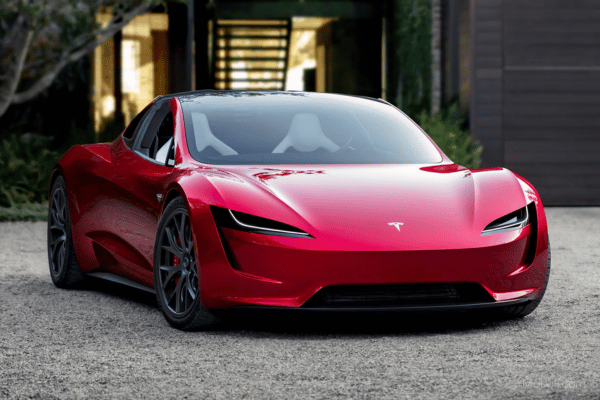
Tesla CEO Elon Musk confirmed the October 1 presentation earlier in September.
The event could finally provide answers about the production version of a car that Tesla originally revealed in 2017.
Since then, the Roadster has experienced repeated delays while Tesla focused its resources on higher-volume vehicles, artificial intelligence, autonomous driving technology and other projects.
The Roadster Was Originally Revealed in 2017
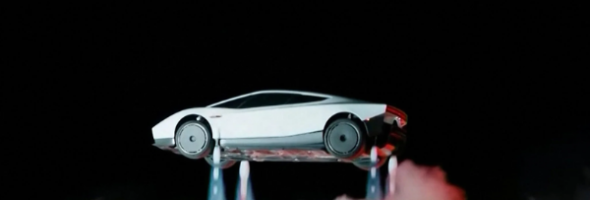
Tesla first showed the second-generation Roadster in November 2017.
At the time, the automaker presented it as a dramatic demonstration of what an electric performance car could achieve.
Tesla originally suggested production could begin in 2020.
That deadline came and went.
The Roadster was later pushed back several times as Tesla dealt with supply-chain challenges and prioritized other products.
Nearly nine years after the original presentation, the October 1 event could finally show how much the production vehicle has changed.
The Roadster is particularly important because Tesla itself began with a sports car.
The original Tesla Roadster launched in 2008 and helped demonstrate that electric vehicles could offer performance as well as efficiency.
Tesla Has Made Extraordinary Performance Claims
Tesla has previously published ambitious performance targets for the second-generation Roadster.
Earlier specifications included extremely rapid acceleration and a very high top speed.
However, those figures were announced years before the planned 2026 presentation.
Tesla could therefore update or replace some of its original specifications when it reveals the latest vehicle.
The company has also discussed a potential high-performance package connected with technology developed by SpaceX.
Musk has repeatedly suggested that the Roadster could incorporate unconventional performance technology.
Exactly what reaches the production vehicle remains unknown.
That distinction will be important during the October 1 event.
Concept demonstrations and earlier targets should not automatically be treated as final production specifications.
Why the October 1 Presentation Matters
The electric performance market has changed dramatically since Tesla first revealed the Roadster.
In 2017, relatively few manufacturers offered high-performance electric vehicles.
Today, Tesla faces competition from established performance brands and newer EV manufacturers.
Electric cars capable of extremely fast acceleration are now available from companies including Porsche, Lucid and several Chinese manufacturers.
That means the Roadster will need to offer more than acceleration alone.
Battery technology, charging speed, driving range, weight and handling could become equally important.
The presentation could also reveal how Tesla intends to position the Roadster within its modern product lineup.
Tesla Has Changed Significantly Since 2017
Tesla today is very different from the company that originally announced the new Roadster.
Its vehicle lineup has expanded considerably.
The Model 3 and Model Y became global high-volume products, while the Cybertruck introduced a radically different approach to pickup design.
Tesla has also moved deeper into artificial intelligence, robotics and autonomous transportation.
More recently, the company has expanded its Semi electric truck program.
Against that backdrop, the Roadster occupies an unusual position.
It is unlikely to become Tesla’s highest-volume model.
Instead, it could serve as a technological showcase demonstrating what the manufacturer can achieve when performance takes priority over mass-market pricing.
Pricing Will Be Closely Watched
One major unanswered question involves price.
Tesla previously accepted reservations for the Roadster and announced pricing years ago, but the automotive market has changed significantly since then.
Battery costs, manufacturing technology, inflation and the overall performance-car market have all evolved.
As a result, pricing announced several years ago may not accurately represent the final production vehicle.
Tesla could clarify pricing and reservation details during the October event.
Another important question concerns existing customers who placed deposits years ago.
The company has not yet publicly provided all of the details surrounding final production allocation.
Range Could Be Another Key Feature
Tesla originally positioned driving range as one of the Roadster’s most impressive characteristics.
Long-distance capability would help distinguish the sports car from electric performance vehicles designed primarily around acceleration.
Battery technology has progressed significantly since 2017.
Tesla has also gained years of experience improving battery efficiency, thermal management and electric powertrain software.
The Roadster could benefit from those developments.
However, updated official production range figures will be needed before direct comparisons can be made with modern EVs.
Competition Is Much Stronger Today
The Roadster will enter a significantly more competitive environment than the one Tesla faced when it first announced the vehicle.
Porsche has expanded its electric performance lineup.
Lucid has demonstrated extremely powerful electric sedans.
Chinese manufacturers have also introduced increasingly sophisticated high-performance EVs.
Several luxury and exotic manufacturers are developing electrified performance vehicles of their own.
Tesla therefore has an opportunity to demonstrate whether the Roadster can once again move expectations for electric performance forward.
Production Timing Remains the Biggest Question
A presentation does not necessarily mean deliveries will begin immediately.
The Roadster’s history makes production timing one of the most important details to watch.
Tesla will need to clarify when manufacturing is scheduled to begin, where the vehicle will be built and when customers can realistically expect deliveries.
These details could determine whether the October 1 presentation marks the beginning of a genuine product launch or another stage in the Roadster’s lengthy development process.
A Long-Awaited Return
Few modern vehicles have experienced a development story as long as the second-generation Tesla Roadster.
Nearly nine years have passed since Tesla first showed the car.
During that time, electric vehicles have moved from a relatively small segment of the automotive industry into the mainstream.
The Roadster now returns to a world where electric performance is no longer unusual.
That makes Tesla’s challenge considerably different.
Instead of simply proving that an electric car can be extremely fast, the company will need to demonstrate why the Roadster still deserves a place among the world’s most advanced performance vehicles.
October 1 could finally provide that answer.